
If your team takes six weeks to hire and top tech talent is gone in about 10 days, your sourcing model is the problem.
I break this down in simple terms: the right sourcing setup can cut time-to-hire by up to 40%, lower hiring costs by 35%, and save 80+ hours per month in internal hiring admin. For scaling teams in SaaS, Technology, IT, Fintech, Engineering, Security, Insurance, and Professional Services, the choice usually comes down to one question: do you need software your team must run, or do you need hiring output now?
Here’s the short version:
- Broad reach tools give you large candidate databases and AI search
- Technical sourcing tools help with engineering and niche roles using GitHub, Stack Overflow, and public work signals
- CRM and sequencing tools help your team run outbound in a more controlled way
- Internal mobility platforms match by skills, not just titles
- Rent a Recruiter fits best when you need delivery, not another platform to manage
What matters most is not feature count. It is how much recruiter time the tool still needs after you buy it, how well it syncs with your ATS, and whether it helps you fill roles faster without pushing up cost.
I Tested 5 AI Sourcing Tools for Recruiters – Here’s What Actually Works
sbb-itb-a23bd6a
Quick Comparison
| Category | Best fit | Main business impact |
|---|---|---|
| Embedded Recruitment | Teams that need sourcing and outreach handled for them | More hiring output, less internal admin, lower agency dependence |
| Sourcing Platform | Teams with recruiter capacity in-house | More reach, better search, lower manual sourcing time |
| Talent CRM | Teams running outbound at volume | Better follow-up, cleaner pipelines, stronger re-engagement |
| Internal Mobility Platform | Mid-market and enterprise teams | Lower external spend, better use of internal talent |
| Human-led Sourcing Service | Lean teams under hiring pressure | Pre-vetted shortlists without adding full-time headcount |
I cover all 10 AI-powered recruitment tools, where each one fits, and what the trade-offs look like if you care about cost, speed, and control.
1. Rent a Recruiter
If you need sourcing capacity now, without spending months building it in-house, Rent a Recruiter gives you extra recruiter firepower fast.
This is not software you buy and then figure out yourself. Rent a Recruiter provides embedded recruiting support, with experienced recruiters joining your team within days. They handle sourcing, outreach, qualification, and handoff from start to finish.
That makes it a strong fit for high-growth tech and SaaS teams under pressure to hire at pace.
The embedded hiring approach is simple. You get recruiters working inside your hiring setup, using AI-supported workflows to find people your team might miss through basic keyword searches alone. That includes passive talent across LinkedIn, GitHub, and the open web.
Those sourced profiles are then turned into a ranked shortlist your hiring team can review straight away. Pipeline data also syncs into your current ATS or CRM, so you keep visibility without adding more admin.
The business impact stands out:
- 82% CV acceptance ratio [6]
- 60% cut in overall recruitment time [6]
- 80+ hours saved per month in internal hiring and admin work [6]
Pricing is custom and depends on hiring volume and team size.
2. LinkedIn Recruiter

LinkedIn Recruiter gives your team access to a huge professional network for tech, product, and leadership hiring in the U.S. For scaling companies, that matters. If you need reach across SaaS, IT, Fintech, Engineering, or Professional Services, LinkedIn is often where the search starts.
That said, reach on its own does not equal hiring output. The commercial question is simple: how well does that reach turn into qualified prospects, saved recruiter time, and better hiring outcomes?
Use LinkedIn for broad market coverage, then layer in GitHub or Stack Overflow when you need deeper technical signals for engineering roles. LinkedIn helps you find a large pool fast. The next step is narrowing that pool without burning hours on low-fit profiles.
AI Search and Ranking
LinkedIn’s AI search tools let recruiters search in plain English, which cuts down the time spent building long Boolean strings. It also ranks candidates using intent signals, such as recent profile updates and engagement with career content.
For busy hiring teams, that can reduce manual screening work at the top of the funnel. LinkedIn says Hiring Assistant reviews 81% fewer profiles, lifts InMail acceptance by 66%, and saves about 1.5 hours per role [4].
If your team is hiring across several roles at once, those time savings can add up fast. Less time spent searching means more time spent moving strong people through the process.
Outreach Automation
Once LinkedIn surfaces likely fits, outreach is usually the next bottleneck. LinkedIn can draft personalised InMails using profile and job data, which helps recruiters move faster and keep messaging more relevant.
Still, the numbers keep everyone honest. Cold response rates remain around 5% to 7%, so most teams use LinkedIn as one part of a multi-touch sequence rather than the whole outreach plan [2].
In plain terms, automation helps with speed, but it does not fix weak response rates on its own. You still need strong messaging, follow-up, and a process that keeps good prospects moving.
ATS/CRM Integration
At scale, sourced candidates need to move into your hiring pipeline cleanly. That is where integration matters. LinkedIn connects with ATS platforms such as Greenhouse, Lever, Workday, and Bullhorn [4][5].
That can help reduce admin and keep recruiter workflows tighter. But there is a trade-off. Profile data is less portable than in standalone sourcing tools, which can limit how easily your team moves data across systems [4][5].
Cost also needs a close look. InMail top-ups and extra fees can add 20% to 40% on top of the base subscription [4]. Recruiter Lite starts at around $169 to $199 per seat, while enterprise pricing is custom [4].
For hiring leaders, that means LinkedIn Recruiter can work well when you need broad access and built-in workflow links, but the total cost can climb if your team leans hard on outreach volume.
3. hireEZ
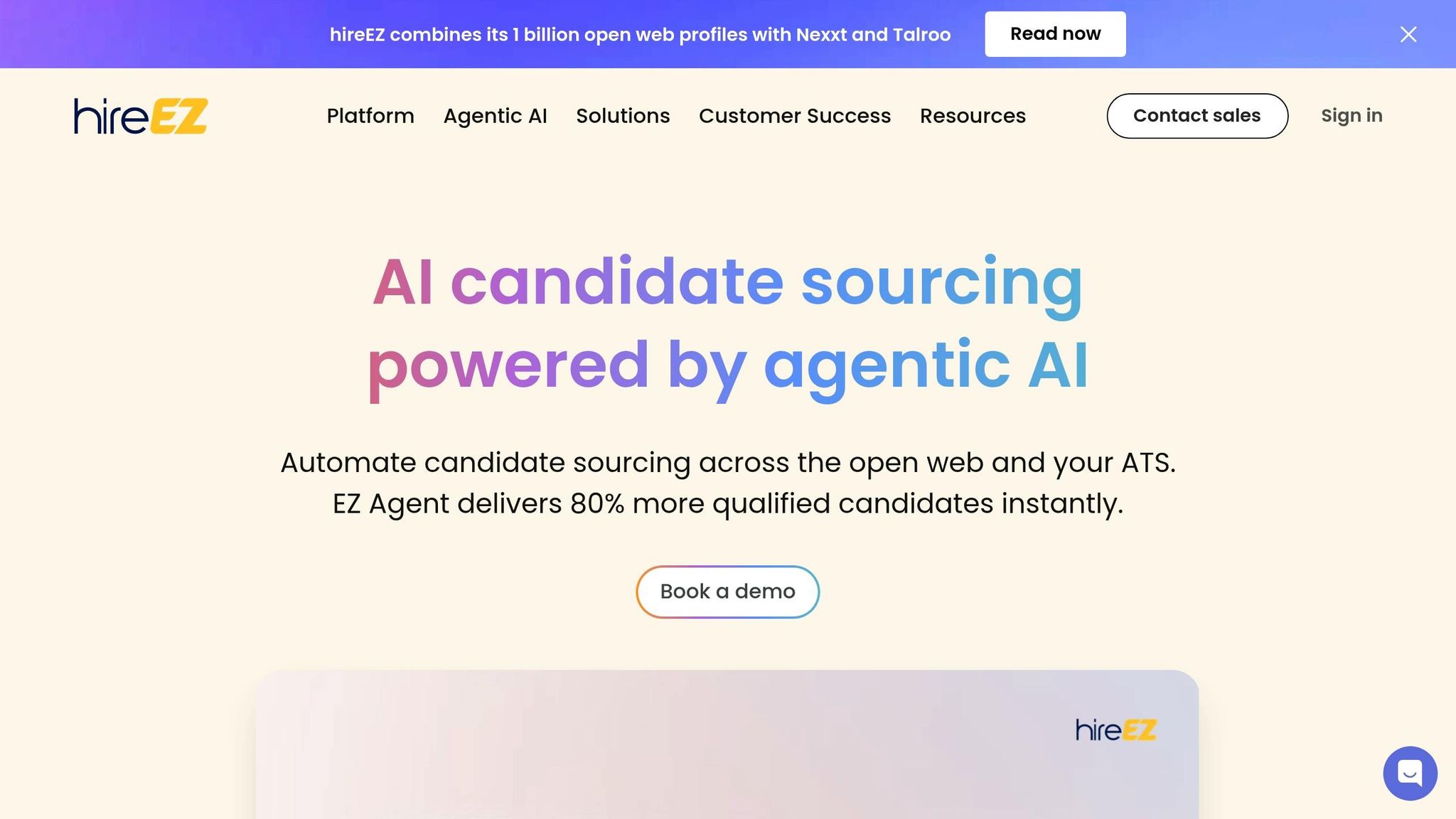
hireEZ pulls candidate signals from more than 45 platforms, including GitHub, Stack Overflow, and Kaggle, to create one enriched profile [3][2]. For hiring teams chasing hard-to-find engineers, that matters. You can spot people with strong technical proof points even if they have a light LinkedIn presence. In practice, that means faster shortlists and less manual searching across channels.
Sourcing Coverage and Profile Depth
hireEZ covers 800 million+ profiles globally [4]. It looks beyond job titles and self-reported experience, using technical signals to help identify fit [2]. That makes it a strong option for specialised engineering hiring, where a title alone rarely tells you enough.
AI Matching, Ranking, and Rediscovery
AI match scoring ranks candidates based on role fit, intent, and engagement [2][6]. It also pulls overlooked applicants back out of your ATS, so teams can revisit people already in their database instead of paying for more external sourcing [3].
That can have a direct cost impact. If your team already has a large ATS database, rediscovery can cut hiring costs and save recruiter hours.
Outbound Automation and Pipeline Engagement
The platform automates multi-touch outreach across email, LinkedIn, and phone [3][2]. It also deduplicates candidates across channels, which helps stop teams from doing the same work twice [3][2].
Users have reported a 70% to 75% drop in total sourcing time after rollout [2]. That’s a big shift for talent teams under pressure to fill specialist roles without adding more headcount.
ATS/CRM Integration
Bi-directional connectors with Greenhouse, Lever, Workday, and Bullhorn sync candidates back into your ATS [3][2]. That helps keep pipeline data clean and gives hiring teams better visibility across the process.
hireEZ also includes market insights reporting on talent supply and competitive pay, which can help recruiters set clearer expectations with hiring managers [3]. If you’re hiring in SaaS, Technology, IT, Fintech, or Engineering, that kind of data can stop wasted time on roles priced outside the market.
Pricing usually ranges from $169 to $500 per user per month, with custom enterprise pricing also available [2][6]. Review scores sit above 4.5 stars across major review sites, though smaller teams may struggle to make the numbers work.
4. Gem
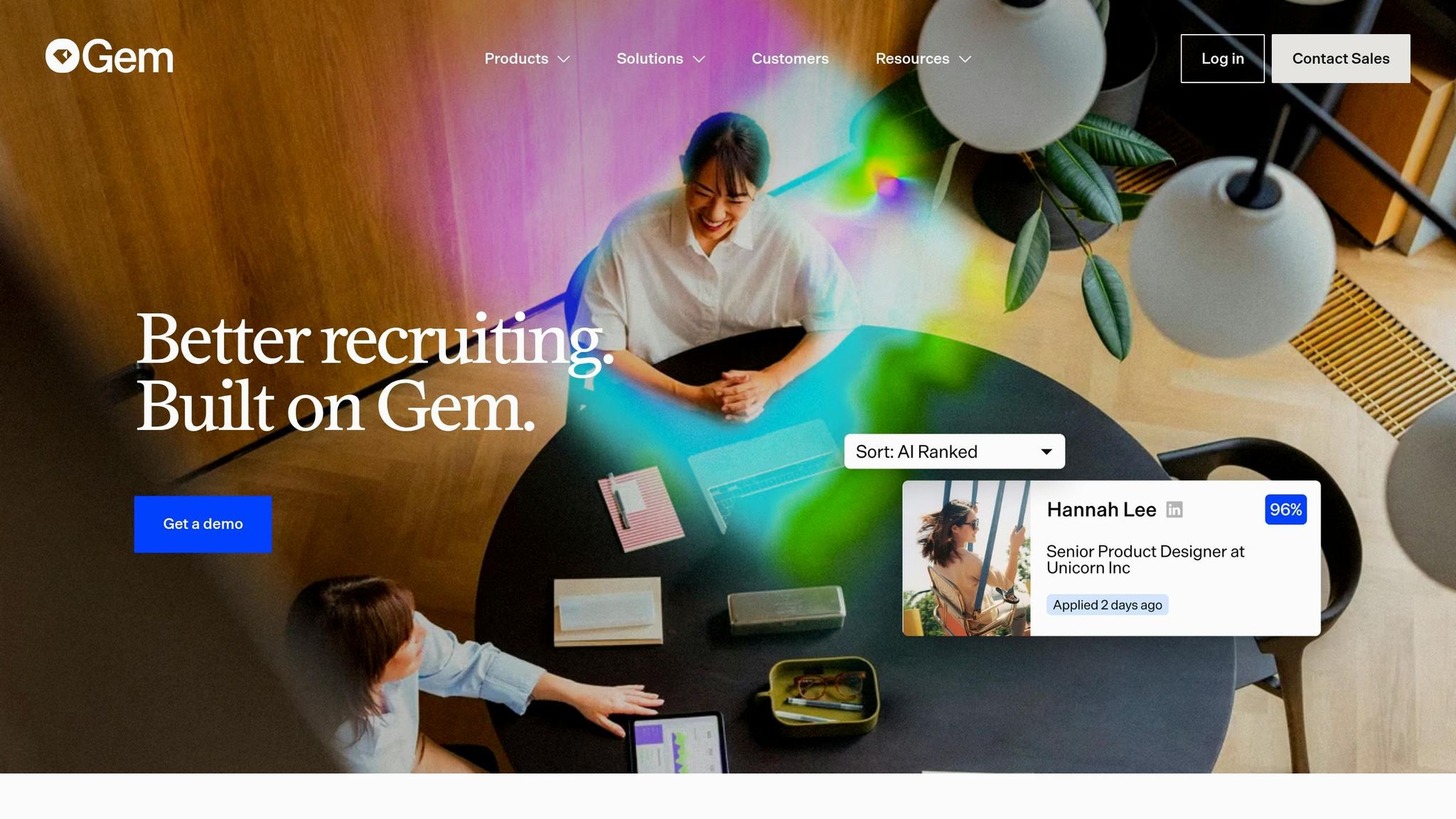
Gem is a talent CRM and sourcing platform that sits on top of your ATS. It adds sourcing reach, automated outreach, and pipeline analytics without replacing tools like Greenhouse or Lever. [3] If your team needs sourcing to become a managed hiring pipeline, not just a longer prospect list, Gem fits that job.
Sourcing Coverage and Profile Depth
Gem pulls from 850M+ profiles across dozens of databases, which helps recruiters reach passive talent who may have little or no LinkedIn activity. [2][4] That matters when your team is hiring into tight markets and the usual channels keep turning up the same people.
It also builds a single candidate profile with contact details, current title, skills, and past touchpoints with your team. [3][1] In practice, that means less time piecing data together across tools and more time moving the right people through the funnel.
AI Matching, Ranking, and Rediscovery
Once Gem finds profiles, it uses relationship history to help rank who your team should contact first. [3] That can cut wasted outreach, especially when recruiter time is tight and hiring targets are high.
Gem’s ATS rediscovery feature brings back silver medalists and other previously qualified candidates. [3] That’s a strong commercial win. Warm, pre-vetted talent is often cheaper and faster to convert than starting a cold external search from scratch.
Outbound Automation and Pipeline Engagement
Gem automates multi-channel outreach across email, LinkedIn, and phone. [2][4][5] For teams running outbound at scale, that helps keep follow-up steady without adding more manual admin.
Most candidate responses happen between the 2nd and 6th touchpoint, which is where a structured cadence starts to pay off. [2] If your recruiters are still chasing reminders in spreadsheets or inboxes, that gap adds up in lost time and missed replies—a common sign you need a recruitment health check.
ATS/CRM Integration for Scalable Tech Hiring
For teams already sourcing at volume, the main value is pipeline control. Gem connects with Greenhouse, Lever, Ashby, and Workday, so candidate context stays in sync across systems. [3][2] That gives hiring leaders better visibility and helps avoid the messy handoffs that slow recruitment down.
It also includes a browser extension, so recruiters can add candidates to Gem while browsing LinkedIn or other professional platforms. [2][5] That makes top-of-funnel work easier to manage during busy hiring periods.
For scaling tech teams, the mix of ATS integration and pipeline analytics makes Gem a solid option for growing hiring output with more structure. Pricing starts in the low hundreds per user per month. [2][5]
5. SeekOut
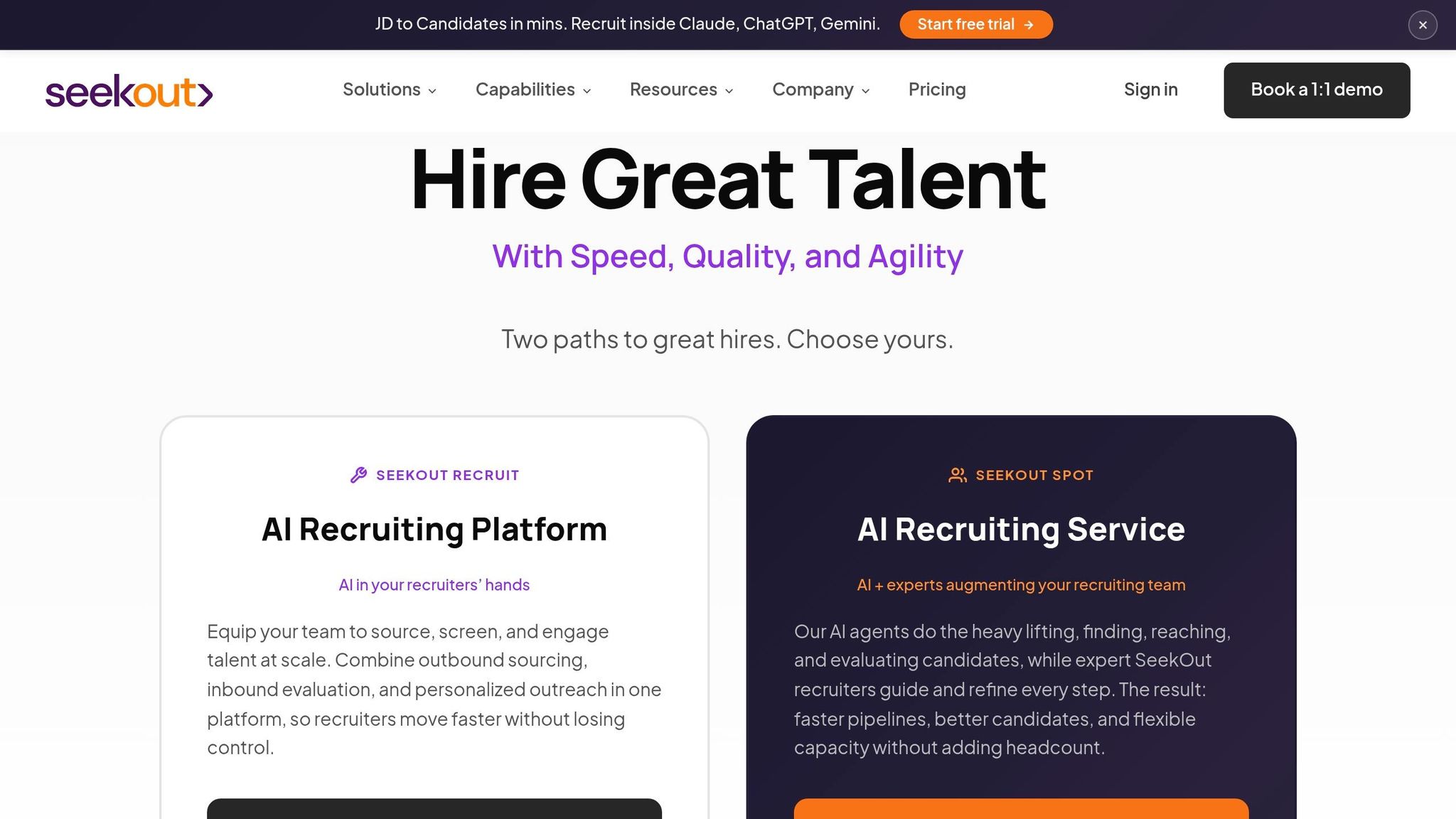
SeekOut stands out when you’re hiring for technical roles and need more than a standard profile can show.
It’s built for technical, engineering, and security-cleared hiring. The platform pulls data from GitHub, Stack Overflow, academic publications, conference speaker lists, specialist job boards, and the open web.
Sourcing Coverage and Profile Depth
SeekOut indexes 800 million+ profiles, which matters when you’re hiring for hard-to-fill roles like deep-tech engineers, security-cleared talent, or researchers. In those searches, a thin LinkedIn profile often misses the details that matter, like code contributions or published research. [3][4]
AI Matching, Ranking, and Rediscovery
A big database only helps if you can sort through it well.
SeekOut uses NLP to turn job descriptions into search filters, then ranks candidates based on skills, career path, and experience patterns. That helps your team spend less time digging through weak matches and more time speaking to people who fit the role. [2][3]
Outreach and Pipeline Engagement
SeekOut supports outreach across email, LinkedIn, and phone. It also includes diversity filters and profile blinding for early screening.
Teams using these features report a 10% to 25% improvement in candidate slate diversity. For hiring leaders, that can mean a stronger shortlist without adding manual sourcing work. [2]
Internal Mobility
SeekOut Grow extends the same search approach to internal mobility and skill-gap analysis. If you’re trying to fill roles from inside the business before going to market, that gives you another route to cut hiring time and make better use of existing talent. [3]
ATS/CRM Integration for Scalable Tech Hiring
SeekOut connects with Workday, Greenhouse, and other major ATS platforms. [3] Before you buy, confirm bidirectional ATS/CRM sync so sourced candidates stay searchable in your system.
Pricing usually starts in the low hundreds to several hundred dollars per user per month, while enterprise pricing is custom. That makes it a practical option for high-growth hiring teams that need deeper technical sourcing without adding the cost of repeated agency fees. [2][6]
6. AmazingHiring
AmazingHiring helps recruiters find technical talent across fragmented developer and research sources.
Sourcing Coverage and Profile Depth
It pulls data from 30 to 45+ databases, including LinkedIn, GitHub, Stack Overflow, Kaggle, Dribbble, and academic publications, into one candidate profile [4]. For tech hiring teams, that means less time jumping between platforms and more context in one place.
You get a broader picture of technical experience in a single profile. That matters when you’re hiring into SaaS, IT, Engineering, or Fintech roles where a CV alone rarely tells the full story. A stronger signal base also makes the next step, ranking and outreach, far more useful.
AI Matching, Ranking, and Rediscovery
AmazingHiring ranks candidates based on inferred skills, adjacent experience, and career trajectory, not just exact job titles [3]. That gives hiring teams a better shot at spotting people who may not match the brief word for word, but still fit the role.
For scalable tech recruitment solutions, this ranking layer saves time where it counts. Less manual screening before outreach starts means recruiters can move from search to shortlist with less drag, which helps when hiring targets stack up fast.
Outbound Automation and Pipeline Engagement
AmazingHiring supports multi-channel outreach across email, LinkedIn, and phone [4]. That keeps outreach in one place instead of spread across tabs, inboxes, and spreadsheets.
For lean talent teams, centralising outbound work helps cut admin time and keeps follow-up tighter. It also gives you a clearer view of who has been contacted, where, and when.
ATS/CRM Integration for Scalable Tech Hiring
Bi-directional ATS/CRM sync keeps candidate history in place and helps prevent duplicate outreach as hiring volume grows. That’s a big deal once multiple recruiters, hiring managers, or agencies are touching the same pipeline.
The main value here is speed from search to shortlist, not just access to more profiles. Clean data flow is what turns a sourced profile into an active pipeline record.
7. Fetcher
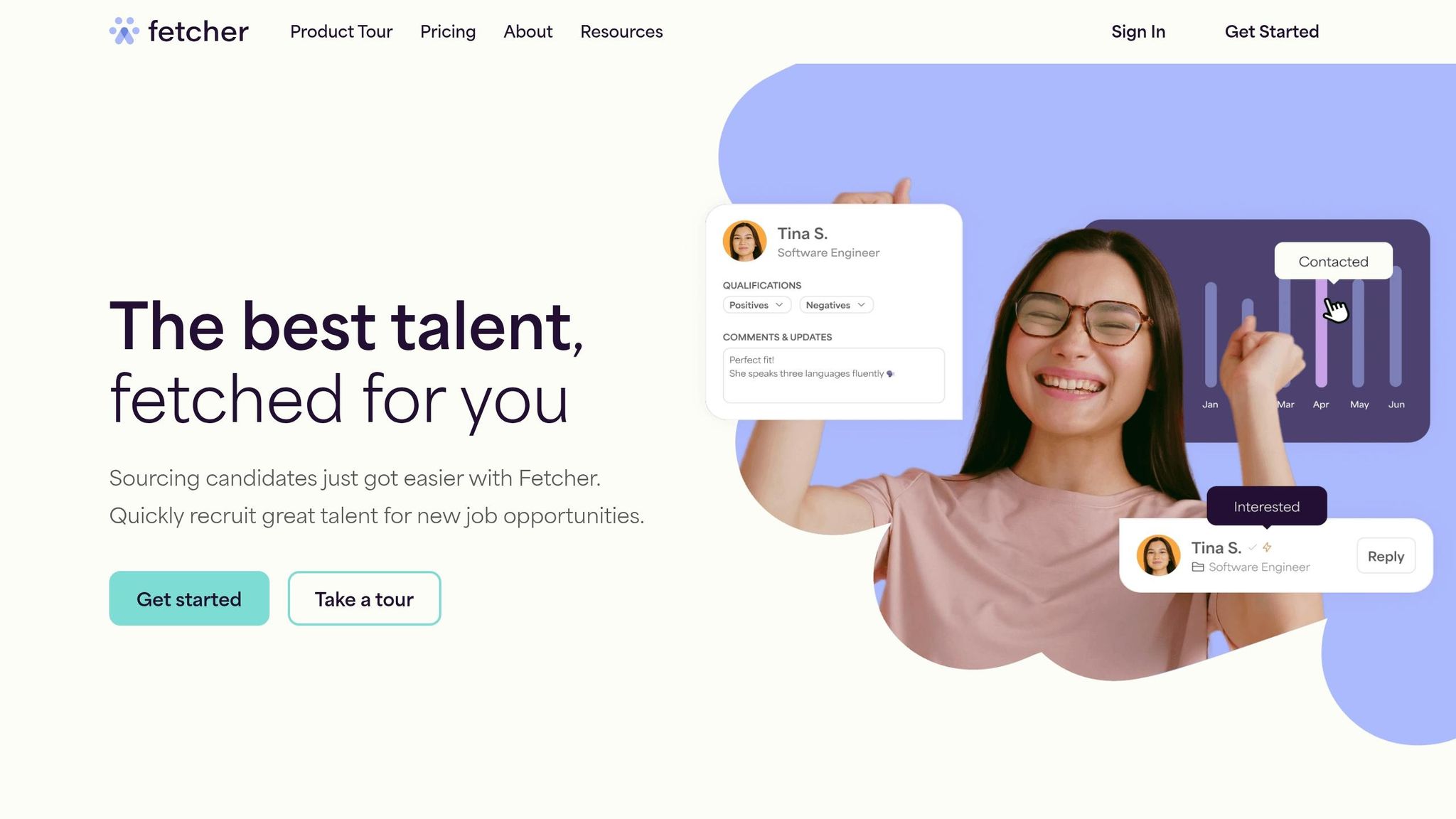
Fetcher is a sourcing-as-a-service platform built to send vetted candidate batches on a set schedule. If your team needs more sourcing output but doesn’t want to add full-time recruiting headcount, or needs embedded IT recruitment support, it can take a lot of pressure off internal recruiters and speed up shortlist creation.
Sourcing Coverage and Profile Depth
Fetcher pulls from LinkedIn, GitHub, Stack Overflow, and public web sources [4]. Each profile includes current titles, skills, contact details, and links to public work [1].
AI identifies people who fit the brief, then human recruiters review each batch before it reaches your team [3]. That mix gives you more sourcing capacity without leaving quality checks to software alone.
AI Matching
Fetcher matches against a defined role and ideal candidate profile. In practice, that means your team is not starting from a vague search. You’re working from a tighter brief that can cut wasted review time.
Built-in diversity analytics also track slate mix, so teams can monitor top-of-funnel equity without adding a separate process [3]. For hiring leaders, that’s useful when you want clearer visibility without more admin.
Outbound Automation and Pipeline Engagement
Fetcher combines scheduled candidate delivery with automated email engagement. It also shows which messages are getting traction, giving your team data on what is landing and what is being ignored [3].
That matters when you’re hiring across several roles at once. Instead of guessing, you can refine outreach based on response patterns and keep recruiter time focused on the best channels and messages.
ATS/CRM Integration for Scalable Tech Hiring
Native integrations help move candidates into your pipeline, with setup usually live within days [3]. That keeps handoffs cleaner and cuts manual work, which is a big deal when hiring volume starts to climb.
If you want even more automation and less human review, the next tool goes further in that direction.
8. Noon AI
For teams that need a deeper technical read on each profile, Noon AI adds AI-based enrichment and role-fit scoring.
It uses large language models to review technical signals from code, projects, and public work, then assigns a role-fit score to each candidate. That matters when a resume looks light, but the person has clear technical proof elsewhere.
In practice, this helps you make better screening calls, especially in SaaS, Technology, IT, Fintech, and Engineering recruitment roles where public work can say more than a CV.
Noon AI also mines your existing ATS to rediscover past candidates. Instead of paying for external sourcing straight away, you can surface people already sitting in your database. For high-growth phases, flexible embedded recruitment can help manage these internal and external pipelines. It syncs with your ATS and CRM, so enriched profiles stay inside your hiring workflow.
9. Beamery
For teams that need sourcing tied to long-term candidate engagement, Beamery adds a deeper enterprise layer.
Beamery is an enterprise talent intelligence platform built to scale sourcing, rediscovery, and candidate engagement [5].
Sourcing coverage and profile depth
Beamery builds richer candidate profiles by tracking engagement history and context over time [5]. That gives past applicants and prospects far more depth than a static record.
If you’re revisiting talent from an earlier hiring cycle, that matters. You see more than a name and a CV. You see prior touchpoints, past interest, and the context behind the profile.
AI matching, ranking, and rediscovery
Beamery uses skills inference and predictive matching to surface internal and external candidates, and it scores past prospects by likely response rate so recruiters can revive silver medalists faster [5].
That scoring has a clear business use. It shows recruiters who to contact first, which cuts wasted outreach and helps teams move on warm talent before the market does.
Outbound automation and pipeline engagement
Beamery automates multi-channel outreach to re-engage high-fit prospects without constant manual follow-up.
For scaling hiring teams, that’s a big deal. Less admin, more consistency, and better follow-through across the pipeline, especially when recruiter bandwidth is tight.
ATS/CRM integration for scalable tech hiring
Beamery integrates with enterprise ATS platforms like Workday and Bullhorn, with bi-directional data flow that prevents lost candidate history between systems [5]. Beamery-based stacks can cut time-to-fill by 25% to 40% [5].
That kind of integration is about more than clean data. It helps you keep momentum across sourcing, outreach, and hiring decisions, without your team stitching together notes from disconnected systems.
10. Eightfold AI
For enterprise tech teams, the biggest sourcing edge comes from matching people by skills and future fit, not just job title. Eightfold AI is a strong fit for teams that want skills-based sourcing and internal mobility in one system [3].
Sourcing coverage and profile depth
Eightfold uses deep-learning models to infer skills, adjacent experience, and career potential from public career data [3]. That matters most when titles vary across engineering, product, and data roles.
If you’ve ever compared profiles with titles like Software Engineer II, Platform Developer, and Backend Engineer, you already know the problem. The title tells you very little. The skills tell you far more.
That makes Eightfold useful when CV or profile signals are light, but the evidence of skill is there [3].
AI matching, ranking, and rediscovery
Eightfold’s matching engine applies the same model to both external candidates and internal employees, surfacing current team members for open roles alongside external prospects [3]. That shifts internal mobility into a main sourcing channel, not an afterthought.
For scaling teams, that has a direct commercial upside. You can expand the talent pool you already have access to, cut extra external spend, and fill roles with more context around fit and ramp time [3].
ATS/CRM integration for scalable tech hiring
Eightfold integrates with Workday, SAP SuccessFactors, and Greenhouse, and can write back to those systems so recruiters stay in one workflow [3]. That matters when hiring volume is high and you don’t want your team bouncing between tools just to keep data current.
Before rollout, request NYC Local Law 144 bias-audit documentation and EU AI Act alignment [3]. Those checks matter more at enterprise level, where procurement, legal, and HR teams will want clear documentation before sign-off.
Eightfold uses an enterprise annual licensing model and is generally positioned for mid-market and enterprise teams hiring at scale [3].
Side-by-Side Comparison of All 10 Tools
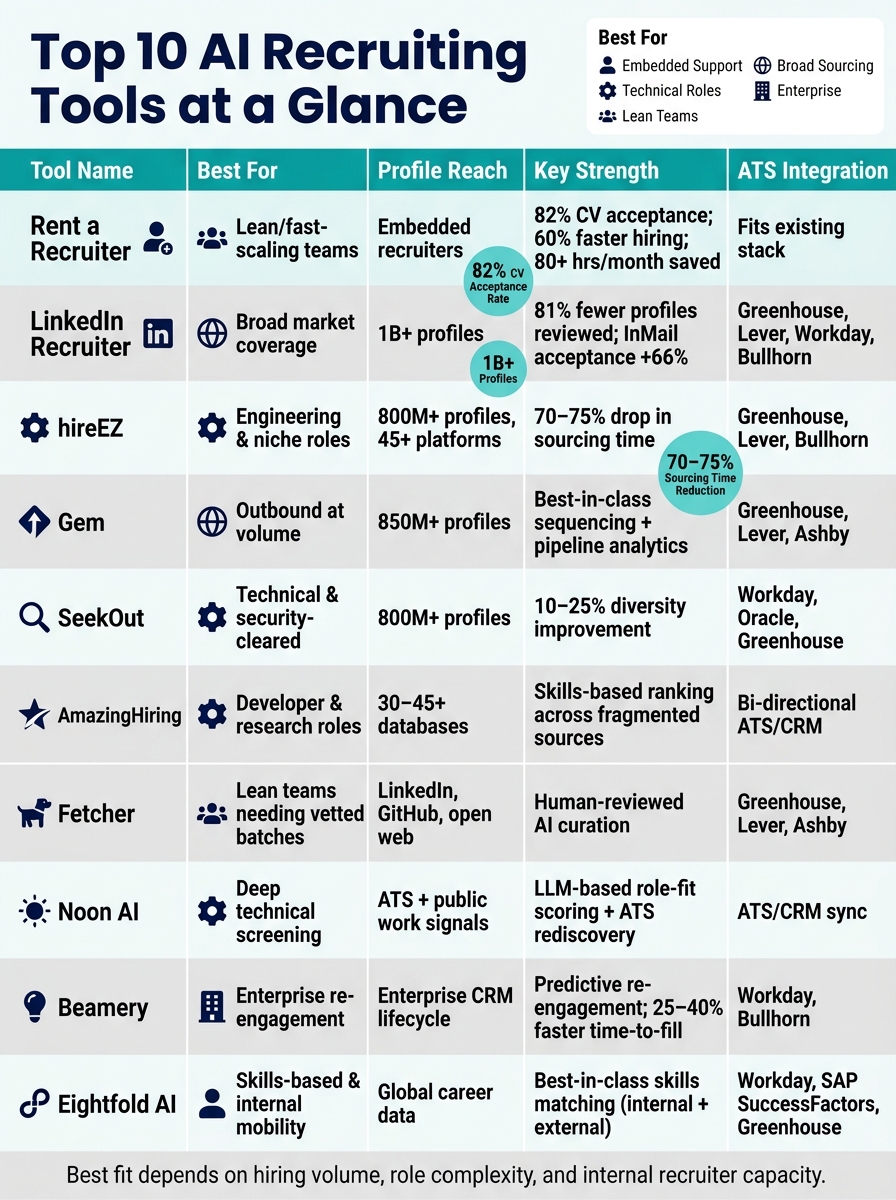
Top 10 AI Recruiting Tools Compared: Reach, Matching & Automation
No single tool comes out on top in every area. The best fit depends on your team size, the roles you’re hiring for, and how much day-to-day hiring work your team can take on. The table below gives you a quick view of sourcing reach, matching, automation, and integration depth.
| Tool | Sourcing Coverage & Profile Depth | AI Matching & Rediscovery | Outbound Automation | ATS/CRM Integration |
|---|---|---|---|---|
| Rent a Recruiter | Embedded recruiters manage sourcing, outreach, qualification, and handoff inside your existing hiring process | Recruiter-led sourcing and matching | Managed outreach and coordination | Fits within your existing hiring stack |
| LinkedIn Recruiter | 1B+ profiles on LinkedIn only [4] | Hiring Assistant reviews 81% fewer profiles; InMail acceptance up 66% [4] | InMail-centric; cold response rates around 5 to 7% [2] | Broad ATS coverage |
| hireEZ | 850M+ profiles across 45+ platforms, including GitHub and Stack Overflow [3] | Strong ATS rediscovery; surfaces silver-medalist candidates | Multi-channel sequences across email, LinkedIn, and phone | Greenhouse, Lever, Bullhorn [3] |
| Gem | 850M+ aggregated profiles with CRM layer [2][4] | Relationship intelligence and re-engagement | Best-in-class sequencing with pipeline analytics [3] | Greenhouse, Lever, Ashby |
| SeekOut | Deep technical and niche sourcing, including security-cleared and diversity-focused talent [3] | Strong attribute-based search | Automated nurture | Workday, Oracle, Greenhouse |
| AmazingHiring | Broader technical sourcing across developer and research sources | Strong skills-based ranking | Multi-channel outreach | Bi-directional ATS/CRM sync |
| Fetcher | Curated batches with human-in-the-loop pre-vetting [3] | High, human-reviewed AI curation | Automated email sequences | Greenhouse, Lever, Ashby |
| Noon AI | Deep technical enrichment from code and public work | High role-fit scoring | Limited outbound automation | ATS/CRM sync |
| Beamery | Enterprise CRM data across the talent lifecycle | Predictive re-engagement and skills inference | Nurture campaigns | Enterprise-grade ATS/HRIS integrations |
| Eightfold AI | Global; infers skills and potential from career data [3] | Best-in-class skills-based matching; covers internal and external candidates | Strongest on internal mobility | Workday, SAP SuccessFactors, Greenhouse |
The main trade-off is reach versus hands-on management.
Some tools give you massive profile volume and heavy automation, but they still need internal recruiter time to run well. Others take more of the work off your plate, which matters if you’re scaling fast and your hiring team is already stretched.
Use the scenarios below to narrow your shortlist based on hiring motion, not just feature count.
| Hiring Scenario | Best-Fit Tools | Why It Works |
|---|---|---|
| Post-funding hiring ramp | Gem, Eightfold AI | High-volume pipeline control |
| New product launch | SeekOut, AmazingHiring | Deep technical search |
| Niche engineering hiring | hireEZ, SeekOut | GitHub/Stack Overflow signal |
| Lean internal recruiting teams | Fetcher, Rent a Recruiter | Lower-management burden; embedded support for lean teams |
If you’re hiring into SaaS, Technology, IT, Fintech, Engineering, Security, Insurance, or Professional Services, that last point matters more than most teams expect. A tool can look strong in a demo and still create extra work once it lands inside your process. If your team is lean, the better choice is often the one that cuts admin, keeps hiring moving, and gives you more control without adding headcount.
Conclusion
When you compare these tools side by side, the choice comes down to four things: reach, match quality, automation, and ATS sync.
The right fit depends on your hiring volume, how hard the roles are to fill, and how much capacity your team has to run the process properly.
That last point gets missed all the time. Execution capacity is often the hidden constraint. Even a strong platform can fall flat if your team doesn’t have the recruiter bandwidth to manage sourcing, outreach, follow-up, and pipeline movement day to day.
Rent a Recruiter places experienced recruiters inside your team to manage sourcing and outreach end to end, without adding permanent headcount.
Choose the tool that fits your hiring model. For more industry insights, visit our recruitment blog. Then back it with a process your team can actually run.
FAQs
How do I choose the right AI sourcing tool for my team?
Start with your hiring needs and current workflow, not a feature checklist.
A tool can look good in a demo and still slow your team down once it hits day-to-day hiring. What matters is whether it helps you find the right people, cuts admin, and fits the way your team already works.
Put context-aware semantic search ahead of basic keyword matching. Keyword search often misses strong people just because their profile uses different wording. Semantic search gives you a better shot at finding relevant talent based on meaning, not just exact terms. For hard-to-fill roles in SaaS, Technology, Engineering, or Fintech, that can mean better pipeline quality and less time wasted.
You should also check that the tool connects cleanly with your current applicant tracking system. If it does not, your team ends up doing manual updates, copying data between systems, and dealing with split reporting. That creates drag fast. Good integration saves time and keeps your hiring data in one place.
Before you commit, run a 30-day pilot on one or two hard-to-fill roles. Keep it small enough to manage, but focused enough to show whether the tool can help under pressure.
Measure the pilot on outcomes that affect the business:
- Cost per hire
- Pipeline quality
Do not judge it only on per-seat pricing or database size. A cheaper tool is not a better buy if your team still spends hours sourcing, screening, and fixing process gaps. And a huge database means very little if the shortlist is weak.
When is managed recruiting better than buying software?
Managed recruiting works better when your team doesn’t have the bandwidth to set up and run AI properly.
Software can automate sourcing and scheduling. But it still depends on clean data, clear intake, and steady human oversight. Without that, AI creates more admin instead of less.
If your team is already stretched, an embedded recruiter can take ownership of the full hiring process. They turn AI output into actual hires, without piling extra work onto your internal team.
Which features matter most for technical hiring?
For technical hiring, look past simple keyword matching. That only gets you so far.
You need context-aware semantic search and fit scoring that can spot equivalent skills, adjacent expertise, and real potential. In practice, that means finding people who can do the job, not just people whose profiles happen to mirror your job description.
It also pays to look for:
- Broad data coverage across technical talent hubs, so your team sees more of the market
- Automated personalised outreach, so you can contact the right people at scale without adding hours of manual work
- Native ATS integration, to keep candidate data clean, current, and easy for your team to access
These features help you cut wasted sourcing time, keep your pipeline organised, and make better hiring calls with less admin.