If your team is still screening CVs by hand, you are burning time and losing candidates. Inbound volume is high, top people move fast, and most scaling teams do not have the recruiter capacity to keep up.
Here is the short version. The right AI matching tool helps you cut screening time, shorten time-to-hire, and get more from your ATS and sourcing spend. Some tools are better for sourcing. Some are better for skills matching. Others are built for high application volume or behaviour-based screening. The mistake is buying one before you know the hiring bottleneck.
If I were narrowing this list for a scaling company in SaaS, Technology, IT, Fintech, Engineering, Security, Insurance, or Professional Services, I would look at it like this:
- HireEZ for sourcing depth and ATS rediscovery
- Eightfold AI for skills matching and internal mobility
- Manatal for lower-cost shortlist generation
- SeekOut for niche technical hiring
- Truffle for high-volume screening
- Skima AI for structured assessment-led screening
- Pymetrics for behaviour-based shortlist validation
The commercial point is simple. AI can remove admin, but it does not make hiring decisions for you. You still need clear scorecards, structured interviews, and recruiter judgment to turn ranked profiles into hires. That is where embedded recruitment often fits best, especially if you want lower cost than traditional recruitment agencies and more control over output.
Best AI Tools for Recruiting Teams in 2026: The Complete Guide for Talent Leaders & TA Professionals
Quick comparison
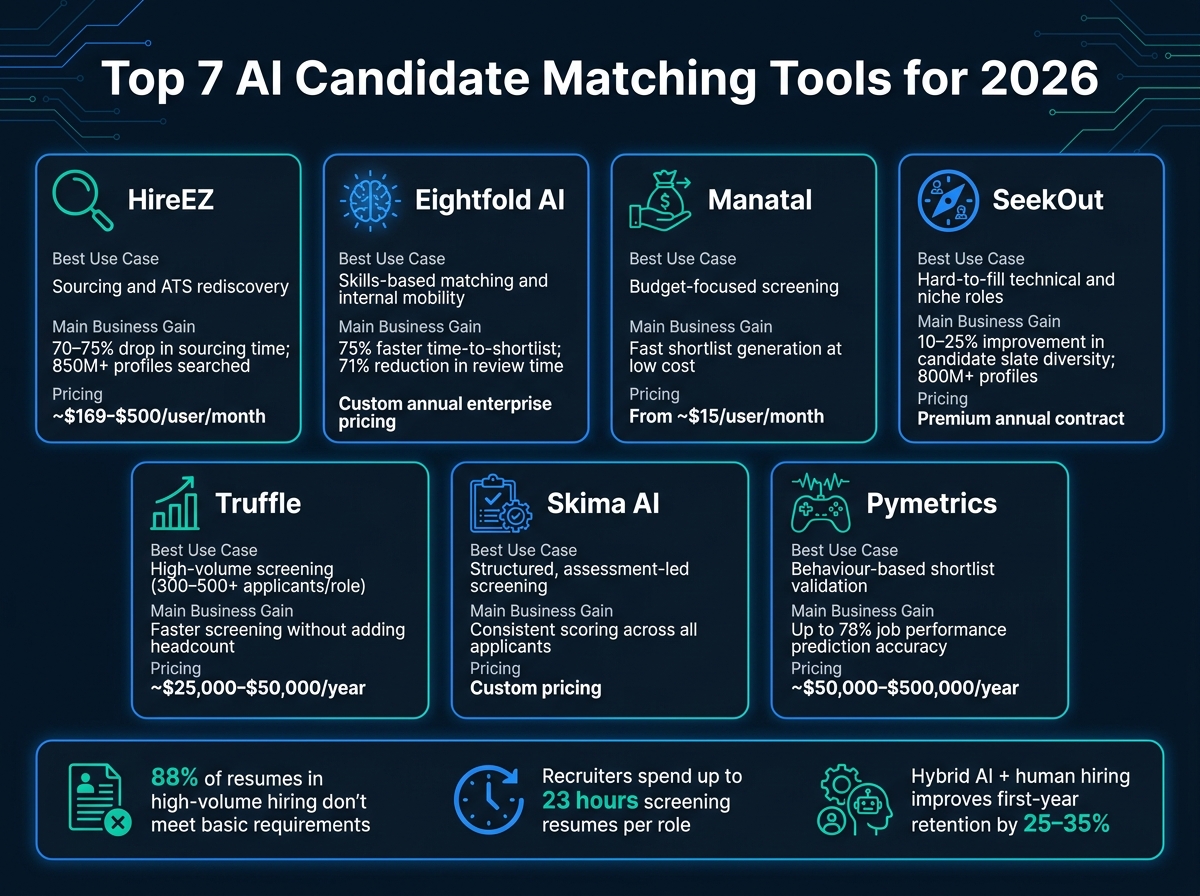
Top 7 AI Candidate Matching Tools Compared (2026)
| Tool | Best use case | Main business gain | Pricing orientation |
|---|---|---|---|
| HireEZ | Sourcing and rediscovery | More qualified pipeline, less sourcing time | About $169 to $500/user/month |
| Eightfold AI | Skills-based matching | Better fit across external and internal talent | Custom annual pricing |
| Manatal | Budget-focused screening | Lower software cost, faster shortlists | From about $15/user/month |
| SeekOut | Hard-to-fill technical roles | Better search reach for scarce talent | Premium annual contract |
| Truffle | High application volume | Less manual screening for 300 to 500+ applicants per role | About $25,000 to $50,000/year |
| Skima AI | Structured screening | More consistent scoring across applicants | Custom pricing |
| Pymetrics | Behaviour screening | Another layer for shortlist validation | About $50,000 to $500,000/year |
If you are choosing between tools, start with the cost of delay. Then ask which platform cuts the most wasted recruiter time, improves shortlist quality, and fits the way your team already hires.
Why AI Candidate Matching Matters for SMEs in 2026
For a company with 50 to 500 employees, hiring pressure feels very different from what a large enterprise deals with.
You don’t have a dedicated sourcing team. You don’t have a bench of coordinators. And you usually don’t have the budget to absorb a slow hire. One open role can drag on delivery, slow revenue plans, or block growth altogether.
Nearly 88% of resumes in high-volume hiring come from candidates who don’t meet the basic requirements [7]. That’s where AI candidate matching earns its keep. It takes the weight off early screening, so your team can spend time on people who actually fit the role instead of working through piles of poor matches [1].
There’s another issue smaller teams run into. About 7 in 10 professionals are passive candidates [8]. They are not sitting in your inbound pipeline, waiting to apply. So if your team relies only on job ads, you’re fishing in a much smaller pond.
AI sourcing helps here. It can search professional networks and public databases for relevant profiles before candidates ever apply. For SMEs without dedicated sourcers, that means a broader talent pool without adding headcount [7][8].
Most SMEs are also sitting on a candidate pool they underuse. Your ATS often holds past applicants who were close to the mark, often called silver medalists. AI matching tools can resurface those people on their own, which cuts down on new sourcing work and helps you move faster when a similar role opens again [1][2].
Cost matters too, especially when every hiring tool has to justify itself. Entry-level tools like Manatal start at about $15 per user per month, while mid-market tools often start around $149 per month. Enterprise contracts can range from a few thousand dollars to tens of thousands, depending on headcount [6][2].
So the bar is simple. The right tool should help you:
- Cut manual screening time
- Open up the talent pool
- Match your hiring volume without adding recruiter headcount
That mix is what makes tool choice such a big commercial decision for SMEs. If you need hiring speed, but can’t keep adding recruiting capacity, the tool has to do more than look smart. It has to save time and improve hiring output.
Where Rent a Recruiter Fits Into AI-Enabled Hiring
AI matching tools are only as good as the data, criteria, and workflow behind them. If job scoping is vague, scorecards change from role to role, or screening lacks structure, even a strong platform can send the wrong people to the top of the pile. For scaling SMEs, the issue is not just the tool. It is whether your process turns AI output into a shortlist your team can act on. That is the gap Rent a Recruiter fills.
This is where an embedded recruiter makes AI output useful in day-to-day hiring. The embedded recruitment model works alongside your AI tools, not in place of them. An experienced recruiter joins your team within days and takes ownership of the judgment-heavy work automation still cannot do well, like culture-fit conversations and offer negotiations. AI handles sourcing, scheduling, and first-pass screening. Recruiters handle interviews, judgment, and closing.
AI takes care of the most time-heavy admin, which gives recruiters more time to move people through the funnel. Recruiters often spend up to 23 hours screening resumes for a single role [1]. When AI takes on that work, that time shifts toward closing candidates. Companies using this model typically cut hiring costs by up to 70% compared with commission-based agencies and save 80+ hours per month in internal hiring and admin time [1].
Here is how AI and an embedded recruiter split the work across the funnel:
| Hiring Stage | AI’s Role | Embedded Recruiter’s Role |
|---|---|---|
| Job Scoping | Drafts role descriptions | Defines company culture and clear success criteria |
| Sourcing | Searches databases and ranks candidates by skills | Reaches out to passive talent and silver medalists |
| Screening | Handles first-pass screening | Reviews AI summaries and spots qualified candidates that were filtered out |
| Interviewing | Automates scheduling and follow-ups | Runs structured interviews for soft skills and culture fit |
| Closing | Generates offer letter templates | Handles negotiations and answers candidate concerns |
Use this model to judge each tool below. The best options cut manual work without removing recruiter judgment.
With that workflow in place, the next step is choosing the AI tool that fits your hiring volume and process.
1. HireEZ
HireEZ turns a job description into search activity across 45+ platforms, then ranks people by skills, experience, and project history [2][3][4]. If you use an embedded recruiter, it works best as the sourcing engine behind the scenes, keeping your pipeline full of qualified passive talent.
Matching Approach
HireEZ uses AI-led sourcing to run searches and rank candidates without a recruiter having to kick off each step manually. It can also automate outreach, which helps you move faster with passive-talent engagement [1].
For lean hiring teams, that matters. Your recruiter can spend less time on search admin and more time on screening, calibration, and closing. In other words, the platform does the heavy lifting at the top of the funnel, while your recruiter handles the judgment calls.
Data Sources and Rediscovery
HireEZ covers more than 850 million profiles [11]. It also includes ATS rediscovery, which searches your existing applicant database and brings back silver-medalist candidates, high-quality people you already spoke to but did not hire the first time [2].
That feature is easy to overlook, but it can save both time and money. Before paying to start a brand-new search, SMEs should check whether strong people are already sitting in the ATS. HireEZ reports a 70% to 75% drop in sourcing time for high-volume roles [11].
Best-Fit SME Hiring Scenario
This is a strong option for lean teams hiring hard-to-fill engineering or specialist roles from passive talent pools. It integrates with Greenhouse, Lever, Workday, and Bullhorn, so candidate data syncs back into your ATS [2].
If your main hiring problem is pipeline depth, not recruiter capacity, HireEZ is a good fit. It supports the sourcing layer well, while your recruiter stays focused on interviews, stakeholder management, and offer conversion.
Pricing
HireEZ costs $169 to $500 per user per month [11]. Treat it as a sourcing add-on, not a full hiring suite.
For SMEs that need stronger sourcing depth first, this is the strongest fit in the stack.
2. Eightfold AI
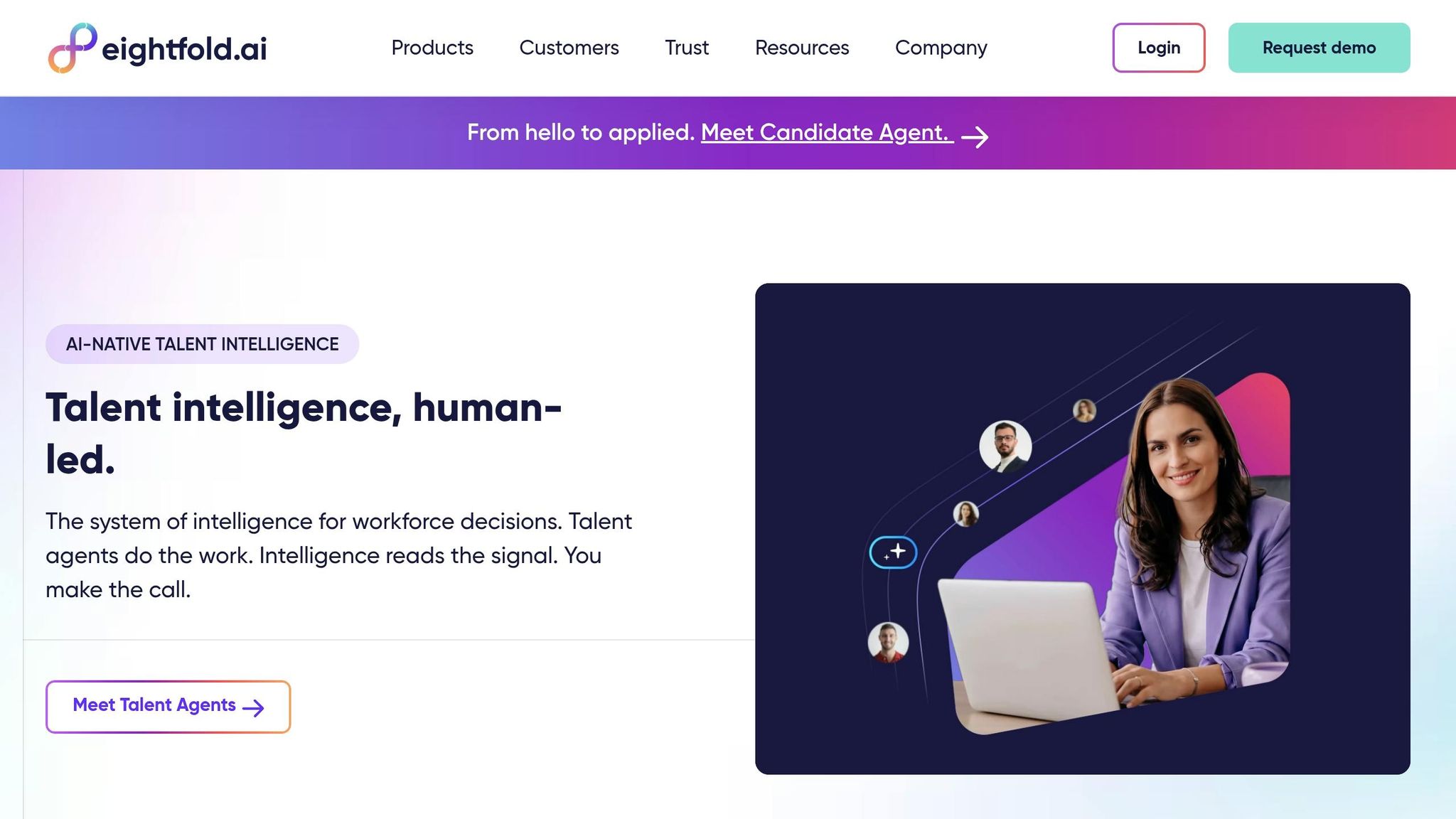
Eightfold AI uses skills data and career history to match people by fit, not just keywords. Its Talent Intelligence Platform uses deep learning to assess capability and potential, while its skills ontology helps spot transferable skills and leadership potential [2][9][10].
This matters if you’re hiring across fast-moving teams and don’t want strong people missed just because their job titles don’t line up neatly.
Eightfold is strongest when you need skills-based matching across both external candidates and internal talent.
Matching Approach
Trained on billions of public career data points, Eightfold can surface strong candidates whose experience sits under different titles or follows a less direct career path [2].
For hiring teams with tighter governance needs, it also provides bias-audit documentation aligned with NYC Local Law 144 and EU AI Act requirements [2].
Data Sources and Rediscovery Depth
Eightfold integrates with Workday, Greenhouse, and iCIMS. That lets you search your ATS for past applicants and surface current employees for open roles by identifying transferable skills and reskilling potential [2][10].
In practice, that means internal mobility becomes part of the hiring process, not a side project.
Teams report 75% faster time-to-shortlist for high-volume roles and a 71% reduction in initial review time [1]. For scaling companies, that’s not just an efficiency gain. It can mean fewer delays, less recruiter admin, and better use of the talent already in your business.
Best-Fit SME Hiring Scenario
Eightfold is best suited for mid-market SMEs with high-volume or more complex hiring needs, especially teams that want sourcing, internal mobility, and DEI support in one platform [2][9].
It can be a strong fit if you need deeper talent intelligence across hiring and workforce planning. But there is a trade-off. Implementation can take weeks to months, depending on integrations and data migration [2]. If you’re a very small startup, that setup load is likely too heavy for the return [2].
Pricing
Eightfold uses custom annual enterprise pricing based on headcount. There is no self-serve tier or public rate card [2][10].
3. Manatal
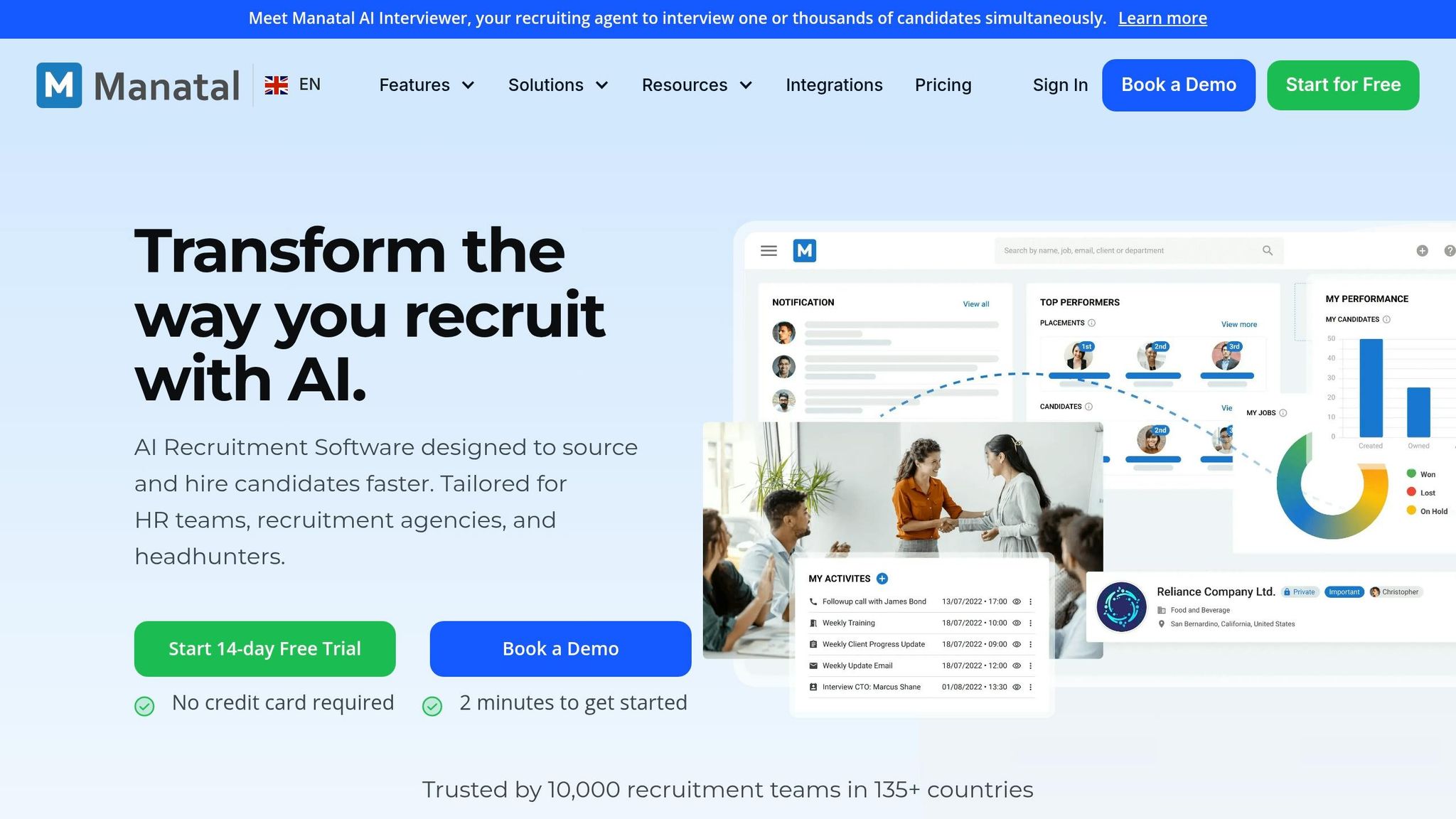
Manatal is a budget-friendly AI matching tool for SMEs that need fast shortlisting without a heavy setup. If your hiring team is lean, it can speed up first-pass screening without adding extra admin.
It suits teams that care more about quick shortlist generation than deep talent intelligence. That matters when inbound application volume is high and your team needs to move fast.
Matching Approach
Manatal scores candidates against job requirements and enriches profiles using LinkedIn and other public sources [6]. Its cloud ATS/CRM keeps candidate data and match scoring in one place [6][13].
That setup helps you cut time spent jumping between systems. You can review applicants, rankings, and profile data in a single workflow.
Best-Fit SME Hiring Scenario
Manatal is best for smaller agencies and cost-conscious SMEs handling high inbound volume and needing ranked shortlists fast [6][13].
In practice, that means less time spent sorting manually and more time spent speaking to the right people first. If your goal is to move from application backlog to interview shortlist with less effort, this is where Manatal fits best.
Pricing
| Tier | Price |
|---|---|
| Entry | ~$15/user/month (billed annually) |
| Mid | ~$35/user/month |
| Enterprise | Custom quote |
For teams that need deeper skills-based matching, the next tool goes further.
4. SeekOut
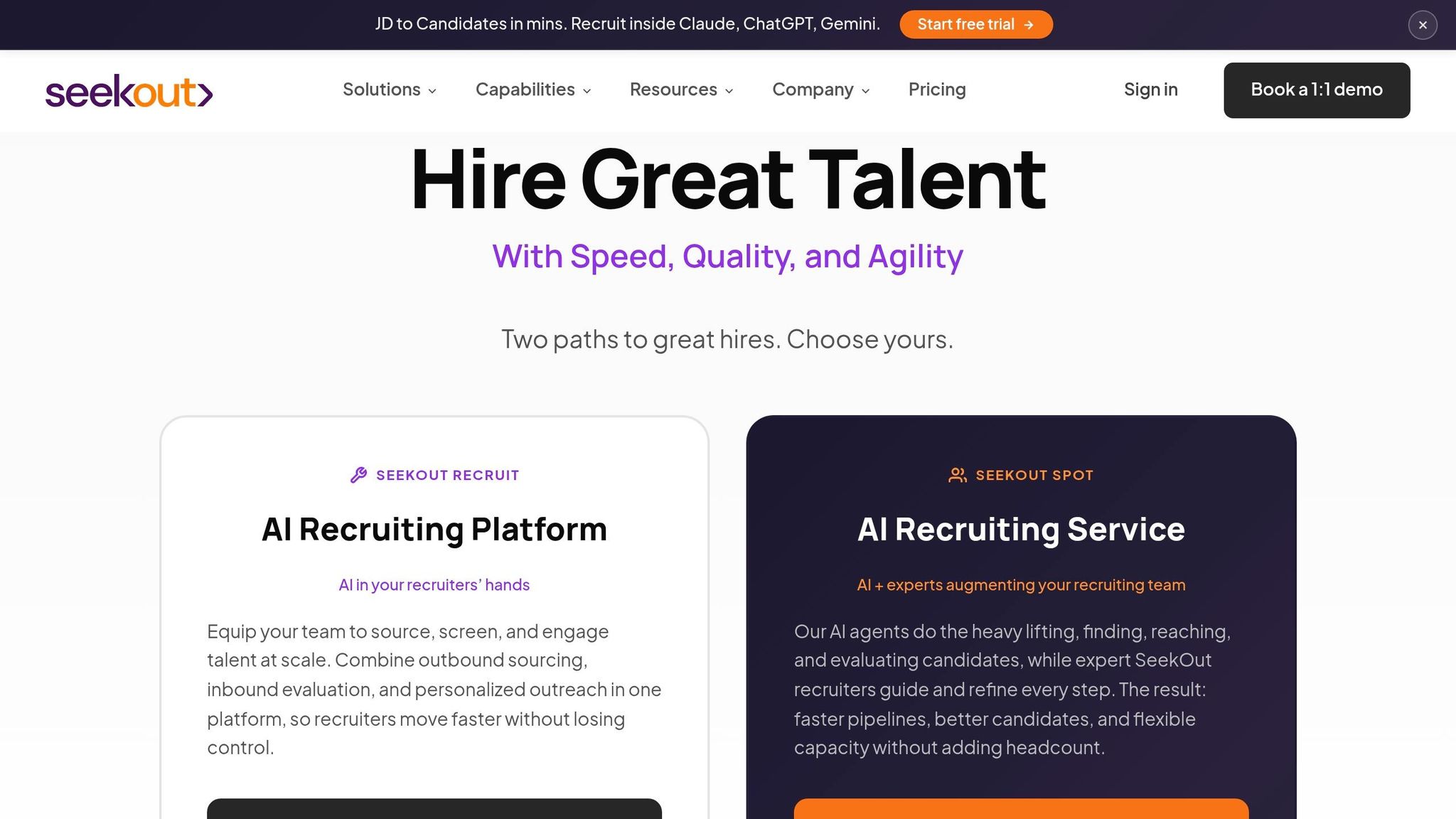
SeekOut is built for scarce, hard-to-fill technical and cleared roles. It pulls from more than 800 million profiles and searches beyond LinkedIn across technical and academic sources [11][14]. That extra reach matters when you’re hiring for niche roles and the usual sourcing channels dry up.
Matching Approach
SeekOut uses AI-assisted search to turn plain-English job descriptions into targeted candidate searches, so recruiters do not need advanced Boolean skills [2]. Instead of relying on simple keyword overlap, it ranks results by fit. In practice, that means your shortlist is more likely to reflect the role you need to fill, not just matching terms on a profile.
Its diversity-support features also stand out. Profile masking hides protected attributes during first-pass review, and filters that support more diverse slates help teams build more equitable shortlists [2]. Organizations using SeekOut report a 10% to 25% improvement in candidate slate diversity [11].
That matters for SMEs because niche hiring often becomes a time drain. If your team can get to a stronger shortlist earlier, you save recruiter hours and reduce delays for hiring managers.
Data Sources and Rediscovery Depth
SeekOut Grow also surfaces internal talent and past candidates for new roles [2]. For SMEs, this can cut wasted effort. If a similar role opens again, you can revisit people already known to the business instead of starting from zero.
That’s a simple but important gain. Less time spent rebuilding pipelines means faster hiring cycles and lower sourcing effort.
Best-Fit SME Hiring Scenario
SeekOut is a strong fit for U.S.-based high-growth SMEs hiring specialised technical, engineering, healthcare, or security-cleared roles, especially when DEI goals matter [2][9]. It integrates with Greenhouse, Lever, and Workday [9][2].
If your hiring plan includes hard-to-find talent in SaaS, IT, engineering, or security, this is the kind of platform that earns its keep through search depth, not sheer volume.
Pricing Orientation
SeekOut sits in the premium tier, with per-seat monthly pricing typically in the low hundreds to several hundred USD [11]. It usually requires an annual enterprise contract, so for very small startups, that’s a serious spend.
Before signing, confirm that the platform allows full data export to your ATS or CRM so candidate records remain an asset your team owns [14]. That’s not a small detail. If you’re paying premium rates, you want your sourcing work to stay with your business.
Use this tool when search depth matters more than volume.
sbb-itb-a23bd6a
5. Truffle
If sourcing tools help at the top of the funnel, Truffle helps at the bottom. It’s built for high-volume hiring, where a large share of applicants can be screened out early for basic disqualifiers. For SME teams with limited recruiter capacity, that’s often where time disappears first.
Matching Approach
Truffle uses resume parsing, skill matching, seniority checks, and linguistic normalization to rank candidates with more consistency. Linguistic normalization maps equivalent terms like "Python programming" and "Python development" to the same skill, so strong applicants are less likely to be filtered out because of wording alone [12].
It also flags inflated job titles by looking at career progression timelines, which helps reduce seniority mismatches early in the process [12]. For smaller teams, that means faster screening without losing control of quality.
Best-Fit SME Hiring Scenario
Truffle is a strong fit when your team is getting 300 to 500+ applications per role and response times are starting to slip [12].
This usually suits SME teams that have:
- Limited recruiter bandwidth
- Very high application volume
- A need to screen faster without adding headcount
At that point, pricing becomes the next filter. You’re not just weighing features. You’re weighing screening volume against budget.
Pricing
Truffle sits in the mid-market range, with annual pricing usually around $25,000 to $50,000 [12].
6. Skima AI
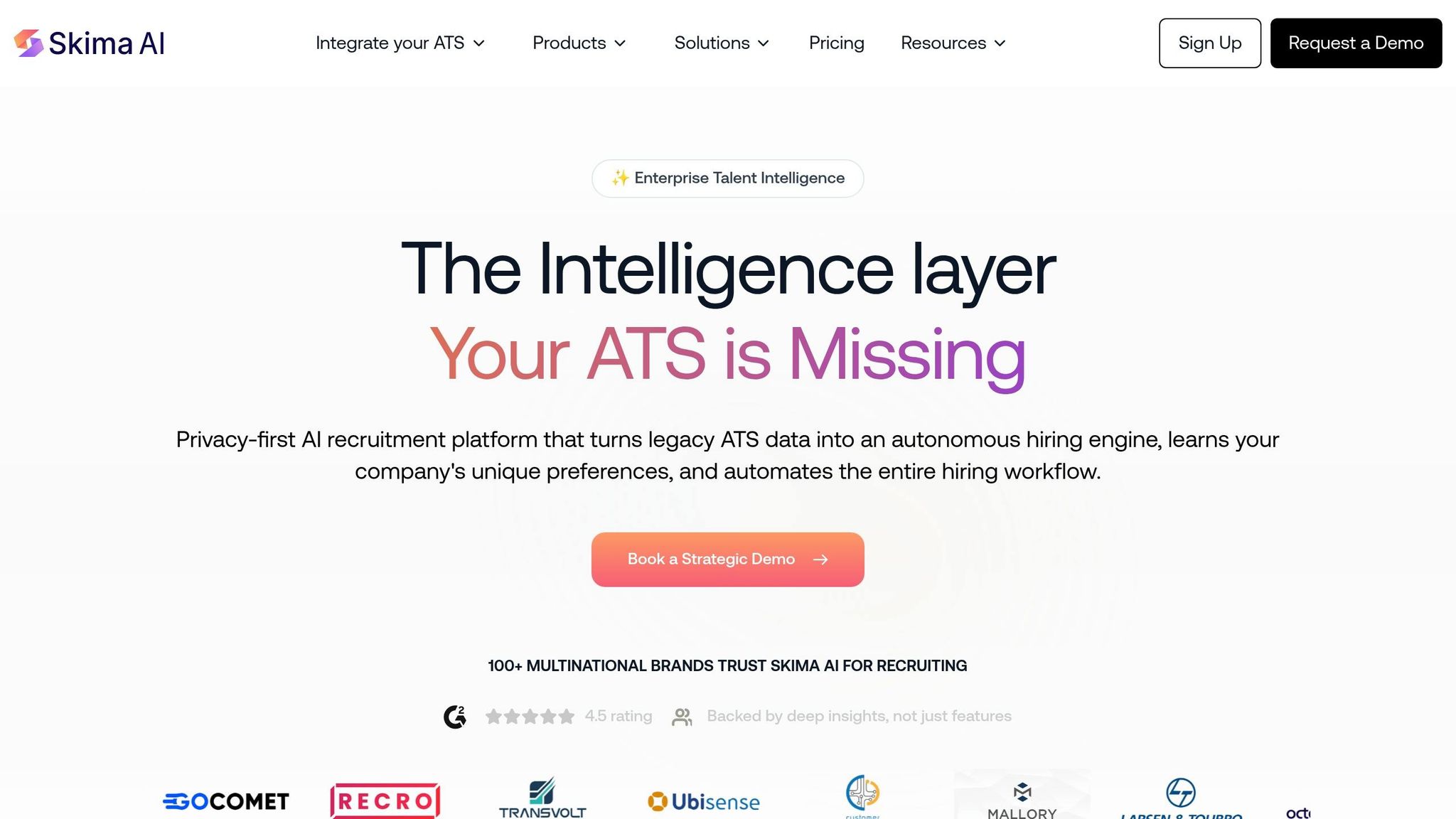
Skima AI suits teams that need structured screening after sourcing, not just better search.
It matches candidates by skills and project history, not job titles or keywords, so your team can compare applicants against the same criteria across different career paths [3]. That matters when resume titles are all over the place, but the core skills are still comparable.
Best-Fit SME Hiring Scenario
Skima AI is at its best in structured screening and assessment-based matching. For lean teams handling high applicant volume, it standardises candidate scoring with asynchronous assessments, so each applicant is measured against the same criteria [15].
The business upside is simple: less manual screening, more consistency, and less time lost debating uneven CVs. If your hiring team needs a clearer way to sort large pipelines without lowering the bar, that’s where this type of setup helps most.
7. Pymetrics
Pymetrics is an off-the-shelf AI recruitment platform for teams that want behaviour-based screening without building custom AI models [2][7]. Instead of scanning CV keywords, it uses neuroscience-based, gamified simulations to assess cognitive and behavioural traits [9].
This platform is not built for sourcing. It comes into play after candidates are already in your process.
That matters if your team has no issue getting applicants, but struggles to compare people in a clear, consistent way.
How It Matches
Its main signal comes from behavioural data gathered through neuroscience-based games [9]. It can also re-score past applicants in your ATS based on cognitive fit [9][5].
That gives you a way to standardise shortlist quality without starting each search from scratch. For busy hiring teams, that can save time and cut some of the back-and-forth that slows down decision-making.
Behavioural assessments can predict job performance with up to 78% accuracy [1].
Best-Fit SME Hiring Scenario
Pymetrics suits smaller teams that need structured, defensible screening without custom AI infrastructure [9][2]. It works best at the initial screening stage and for shortlist validation [9].
In simple terms, this is a screening and validation tool, not a sourcing engine.
If you’re hiring for SaaS, IT, Fintech, Engineering, Security, Insurance, or Professional Services, that distinction matters. A tool like this can help you improve decision quality, but it will not fill the top of funnel on its own.
Pricing
Pymetrics uses custom pricing through direct sales [10]. Annual licensing usually sits between $50,000 and $500,000 [1].
For U.S. buyers, there is another cost and compliance point to keep in mind. NYC Local Law 144 bias-audit rules may also apply [2][10]. For hiring leaders, that means the buying decision is not just about software spend. It’s also about legal review, process design, and how much value you expect the tool to add to screening accuracy and hiring consistency.
What Each Tool Does Best
Compare these tools by the hiring bottleneck they solve.
- HireEZ: Best for sourcing-led matching and ATS rediscovery.
- Eightfold AI: Best for skills-based matching and transferable-skill discovery.
- Manatal: Best for budget-friendly requirement matching and profile enrichment.
- SeekOut: Best for hard-to-fill technical and niche roles.
- Truffle: Best for high-volume screening and fast disqualification.
- Skima AI: Best for structured screening and assessment-based matching.
- Pymetrics: Best for behavioral screening and shortlist validation.
The simplest way to assess these platforms is to start with the problem in front of you. If your team is struggling to find more qualified people in your existing database, HireEZ fits that gap. If the issue is spotting adjacent talent with the right skills, Eightfold AI is better suited.
If cost control matters more than deep platform complexity, Manatal is often the easier fit. If you’re hiring for specialist technical roles where talent is scarce, SeekOut is built for that kind of search.
For teams buried in application volume, Truffle helps cut down screening time by ruling people out fast. If your process leans on structured assessments and consistent scorecards, Skima AI lines up better with that workflow. And if you want another layer of confidence around behavior and shortlist quality, Pymetrics is the one to look at.
Next, compare each option against your budget, hiring volume, and workflow fit.
Use this breakdown to narrow your shortlist by hiring volume, source quality, and workflow fit.
How to Choose the Right Tool for Your Hiring Needs
Use the seven tools above as a filter, not a league table. Start with the bottleneck. Is your issue sourcing, screening, skills matching, or budget? Pick the tool that fits that specific hiring problem.
That sounds simple, but plenty of teams get this backwards. They buy a platform first, then try to force their process around it. That usually costs more and fixes less.
Small teams tend to need tools that are easy to roll out and easy on cost. Bigger teams can often justify enterprise platforms with deeper integrations and more control. The point is to match the tool to the hiring challenge, not the other way around.
For technical hiring, look for tools with broader external search and stronger skills signals. For high-volume roles, speed matters more. You need fast ranking, fast rejection, and less manual review.
Before you sign, require full candidate data export rights. If you’re hiring in a regulated setting, ask for bias-audit documentation at the start, not halfway through procurement.
Use this quick map to narrow your shortlist by hiring scenario.
| Hiring Scenario | Best Tool Match | Key Reason |
|---|---|---|
| Technical / niche roles | SeekOut, HireEZ | Multi-source data beyond LinkedIn |
| Skills-based or internal mobility | Eightfold AI | Deep-learning skills matching and potential scoring |
| High-volume frontline roles | Truffle | Fast parsing and ranking for large applicant pools |
| Behavioral fit validation | Pymetrics | Gamified neuroscience assessments |
| Budget-conscious SMEs | Manatal | Low-cost AI matching for smaller teams |
Once you’ve picked the tool, the next test is execution. AI does not hire for you. It only works when a recruiter turns the output into a shortlist.
How Embedded Recruiters Help AI Matching Deliver Results
Once you’ve picked the tool, the next test is simple: can your team turn rankings into hires?
AI can sort large applicant pools fast. It can push obvious mismatches out of the funnel. But it still needs human judgment to turn that output into a shortlist your hiring team can trust. AI should filter early noise, not make the final hiring call.
That’s where an embedded recruiter makes the difference.
An embedded recruiter sharpens the role criteria, reviews early match quality, keeps interviews structured, and adjusts the system when results start to drift. That mix of automation and human judgment is what turns a software decision into hiring results you can measure.
For SMEs, Rent a Recruiter embeds experienced recruiters within days to manage hiring end to end, while AI handles the top of the funnel. In AI-enabled hiring, recruiter judgment is what turns matching into outcomes.
Organizations using hybrid human-AI decision-making report 25% to 35% higher first-year retention rates [1], which points to a clear commercial takeaway: AI tends to work best when it supports recruiter judgment, rather than trying to replace it.
Conclusion
The right tool depends on your hiring bottleneck. Match the tool to the problem: sourcing, skills intelligence, screening, niche search, or behavioural validation.
For U.S. SMEs in 2026, the takeaway is simple. Scorecards, consistent interview kits, and clear evaluation criteria are what turn AI-generated shortlists into hires you can stand behind.
For scaling SMEs, embedded recruiters help turn AI output into consistent hiring decisions. Once you’ve chosen the tool, structure and recruiter judgment shape the result.
FAQs
How do I choose the right AI matching tool?
Look past the polished demo and bring the conversation back to your hiring needs. A tool can look slick in a sales call and still fall short when your team is hiring for hard-to-define roles.
What matters is how well it finds the right people. Put semantic search and skills-based mapping at the top of your checklist, not simple keyword matching. That gives you a better shot at identifying candidates who fit the role in practice, not just on paper.
Before you sign, ask for:
- A week-by-week implementation plan
- Proof of native ATS integration
- A live demo using an ambiguous role brief
- Clear data export terms
Those four checks can save you time, avoid cost later, and help you spot gaps before the contract is in place.
Can AI matching reduce hiring bias?
AI matching can help cut hiring bias, but it does not remove it.
What it often does is shift bias to a different part of the process. That matters, because a tool can look fair on the surface while still shaping outcomes in ways you may not spot right away.
Features like masked profiles and skill-based matching can make sourcing fairer. They help keep attention on what the person can do, rather than who they are or where they came from. For hiring teams under pressure, that can lead to better shortlists and less wasted time.
But software alone isn’t enough. Regular audits still matter. If you want cleaner hiring decisions, you need tools with clear audit trails, a structured hiring framework, and human oversight at the final decision stage.
In practice, that means:
- Reviewing outcomes on a set schedule
- Using the same scoring criteria across roles
- Keeping humans involved in final hiring calls
The business case is simple: better control, lower risk, and more consistent hiring outcomes.
Do I still need recruiters if I use AI?
Yes. AI can take care of tasks like initial resume screening, candidate sourcing, and interview scheduling. What it can’t do is replace the human judgment that good hiring depends on.
That matters because hiring is not just an admin process. It’s a business decision. You still need people to weigh context, spot nuance, and decide who fits the role, the team, and the stage your company is at.
Used well, AI gives your team time back for the work that moves hiring forward:
- Building stronger candidate and stakeholder relationships
- Making better hiring decisions
- Assessing fit beyond keywords and job titles
In other words, AI supports the process, but people still make the call. For scaling companies, that means less time spent on repetitive tasks and more time spent on hiring outcomes that affect growth.