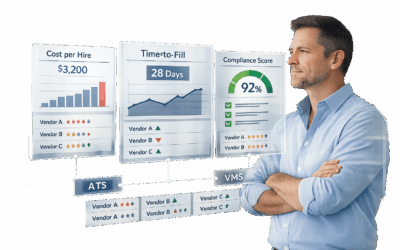
Hiring delays cost time and money. For scaling businesses, temporary staffing offers a faster, more flexible way to meet workforce needs. Instead of committing to permanent hires, you can bring in skilled professionals on demand, reduce hiring costs, and avoid burnout for your core team.
Key takeaways:
- Save money: Temporary staffing reduces fixed payroll costs and avoids expensive hiring mistakes.
- Hire faster: Agencies can provide qualified candidates in 24–48 hours, compared to the 6–10 weeks typical for permanent hires.
- Stay flexible: Use contract or temp-to-hire models to scale your workforce up or down as needed.
Companies like MasterTech saved over $135,000 in recruitment costs by partnering with embedded recruiters, while others reduced hiring admin by 80+ hours a month. Whether you need short-term project support or a trial period for new hires, temporary staffing helps you stay agile without overextending your budget.
Let’s dive into the strategies that can reshape your hiring process.
From Temp Work to Strategic Weapon: The New Era of Contract Staffing
sbb-itb-a23bd6a
Core Strategies for Temporary Staffing
Adapting to changing workforce needs is essential for growing businesses. Temporary staffing strategies provide a way to bring in talent quickly without long-term commitments, offering the flexibility needed to scale effectively.
Work with Embedded Recruitment Services
Embedded recruitment places a dedicated recruiter directly within your team, managing hiring from start to finish while aligning with your company’s culture and goals. This approach goes beyond simply filling roles – it supports long-term workforce planning and retention.
For companies with consistent hiring needs, this model can deliver impressive results. Between 2023 and 2024, Kingspan successfully hired 37 roles in seven months through an embedded recruitment strategy with Rent a Recruiter, saving $130,000 compared to traditional agency fees. Similarly, Nitro achieved 15 hires in 2024 with a 2:1 CV-to-interview ratio, cutting costs by $37,000.
"Cost-effective hiring support"
– Amy Joy McConville, Senior HR Officer at Kingspan
Embedded recruiters also take on time-intensive tasks like posting jobs, conducting background checks, and handling preliminary interviews. This frees up your HR team to focus on initiatives like employee engagement and retention. Additionally, they tap into specialized talent networks in fields like IT, finance, or engineering, reaching passive candidates who might not be actively job hunting. Perhaps most importantly, this model allows businesses to scale their workforce up or down as needed, without the burden of building a permanent in-house recruitment team.
Use On-Demand Contract Staffing
On-demand contract staffing provides immediate access to skilled professionals, making it ideal for handling project surges, seasonal demands, or niche skill requirements. Instead of committing to full-time salaries and benefits, you only pay for the expertise you need, turning labor into a variable expense.
This approach is gaining traction – 63% of employers plan to increase contract hiring in early 2025. It’s a practical way to manage workload spikes, prevent burnout, and ensure business continuity during high-pressure periods. For instance, if you’re rolling out a new ERP system or need an AI specialist for a short-term project, contract staffing lets you bring in the expertise without expanding your permanent team.
To maximize efficiency, forecast staffing needs based on historical data and upcoming projects. When contractors join, provide a smooth onboarding experience by assigning a mentor and offering a welcome packet with essential tools and company information. Clear communication is critical – set specific deliverables, timelines, and outcomes upfront to avoid misunderstandings.
For added flexibility, consider a temp-to-hire model, which allows you to evaluate candidates before committing to a long-term role.
Apply Temp-to-Hire Models to Lower Risk
Temp-to-hire models offer a trial period – typically three to six months – where you can evaluate a candidate’s skills, work ethic, and fit within your team in a real-world setting. This approach reduces hiring risks and supports flexible workforce planning.
The financial benefits are immediate: you pay hourly rates or project fees during the trial phase instead of committing to full salaries and benefits. If the role proves temporary or the candidate isn’t the right fit, you can part ways without the complexities of terminating a permanent employee. For top performers, conversion to a full-time role is seamless.
To implement this model effectively, use job titles like "temp-to-hire" or "contract-to-hire" in your listings to ensure they appear in relevant searches. Streamline the interview process by involving all decision-makers in the first round – this minimizes delays and helps you secure top talent before they accept other offers. Ensure all temporary contracts are legally compliant and include clear terms on project scope, duration, payment, and potential for permanent conversion.
For example, VicReturn filled 18 senior roles in four months during 2024 using this model. They screened 1,481 applicants, saving their HR team over 600 hours of administrative work. This approach benefits both parties: candidates get a chance to experience your company, and you gain valuable insight into their performance before making a long-term commitment.
These strategies not only address immediate staffing needs but also provide a foundation for integrating technology to further streamline hiring processes.
Using Technology to Improve Temporary Staffing
Technology is reshaping how companies handle temporary hiring by automating repetitive tasks and providing real-time insights into workforce operations. Between 2022 and 2024, the number of applications per recruiter soared by 177%, jumping from 900 to over 2,500 – a volume that makes manual processes unmanageable for growing businesses. Modern hiring platforms take over time-consuming tasks, freeing up your team to focus on strategic priorities instead of juggling spreadsheets and endless email threads. These tools build on traditional staffing methods, streamlining everything from recruitment to onboarding.
Apply Applicant Tracking Systems (ATS) for Automation
An ATS simplifies recruitment by centralizing job postings, candidate tracking, and communication – all within a single platform. Tools like EVA-REC and RecruitBPM automate tasks such as posting job openings, filtering resumes, and updating candidate statuses. This can save up to 17 hours per hire while cutting costs by 96%. AI-powered features take it a step further with "zero-touch" screening, where algorithms handle initial qualifications and scheduling so recruiters only step in at the interview stage. For temporary staffing, integrating ATS and CRM systems ensures smooth data flow between candidate pipelines and client needs, avoiding errors caused by disconnected systems.
"If your process requires your team to work harder every time volume increases, the process is the problem." – RecruitBPM
Advanced ATS tools can slash time-to-hire by as much as 80% through automation. To address the 44% of candidates who ghost employers during the hiring process, automated SMS reminders and talent rediscovery tools can help. These features scan your existing database for past applicants who align with new temporary roles, enabling faster placements. Additionally, programmatic advertising tools can automatically purchase ads to target the right candidates, ensuring your job postings reach the right audience.
While ATS platforms streamline recruitment, workforce management tools ensure smooth operations once temporary staff are onboarded.
Add Workforce Management Tools
After hiring, workforce management software takes over to handle scheduling, time tracking, and payroll. For hourly roles, mobile-first platforms like Wonolo and Instawork offer vetted workers with features like automated scheduling and payments. These tools also include GPS-verified time tracking, which prevents fraudulent clock-ins and allows real-time shift claiming. This level of integration is essential for businesses that need flexible staffing solutions to keep up with growth. Consider that unfilled positions can cost an average of $98 per day in lost productivity.
For larger operations, ensure your ATS integrates with Vendor Management Systems (VMS) like Fieldglass or Beeline. This eliminates manual data entry and helps maintain compliance across processes. By leveraging digital document signing and automated onboarding, you can move candidates from "applied" to "ready to work" in under 24 hours.
With contingent workers expected to make up 50% of the U.S. labor market by 2050, adopting the right technology now will position your company to scale efficiently and stay competitive in the long term.
Financial and Operational Benefits of Temporary Staffing
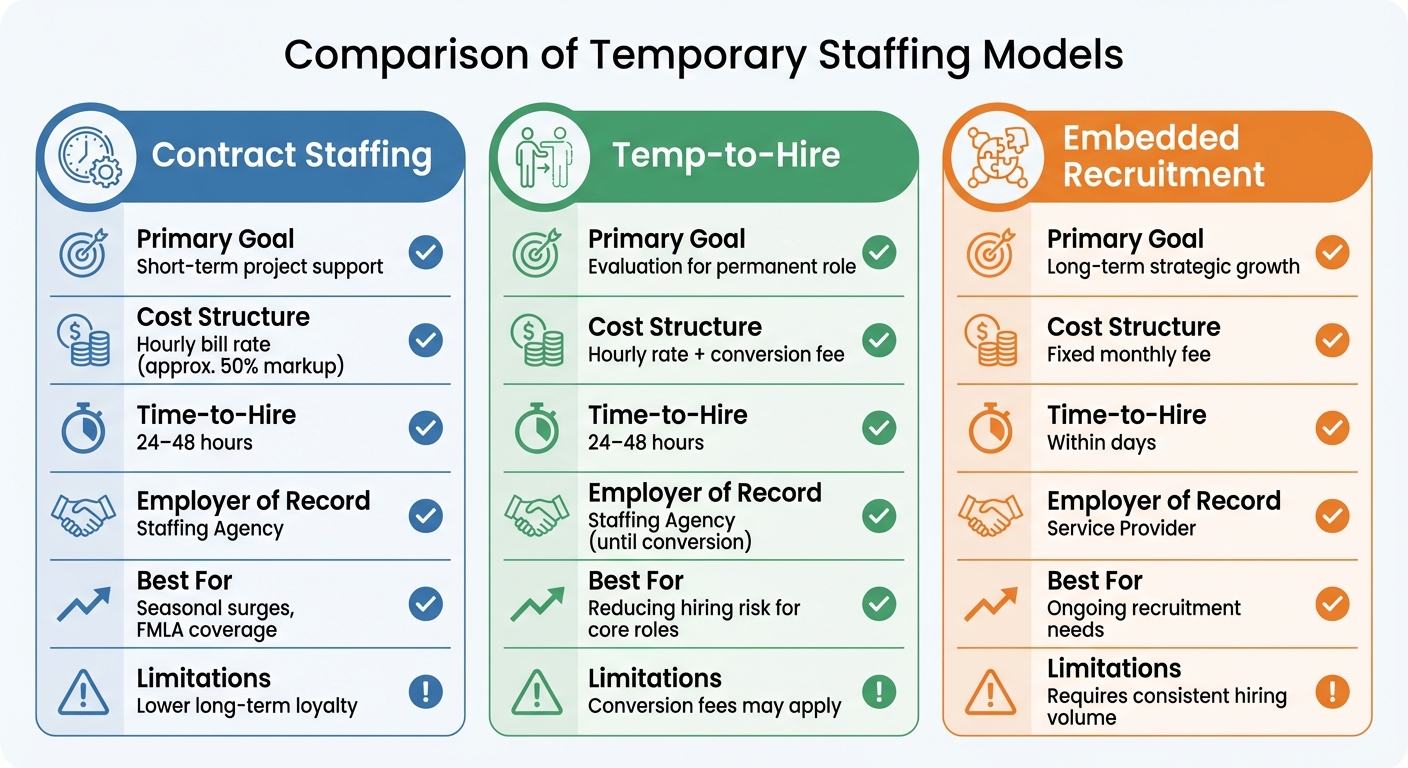
Temporary Staffing Models Comparison: Contract, Temp-to-Hire, and Embedded Recruitment
Temporary staffing reshapes how growing companies manage both budgets and operations. By shifting fixed payroll costs into variable ones, businesses can scale expenses to match demand. For example, hiring a production worker directly at $18/hour results in a first-year cost of approximately $63,337, factoring in benefits, payroll taxes, and recruitment overhead. However, filling that same role through temporary staffing costs around $56,160 – a savings of $7,177, or 11%. This flexibility is especially valuable for companies facing seasonal peaks or unpredictable growth, as it reduces financial strain during slower periods. And beyond cost savings, temporary staffing offers a major time advantage.
Speed is a critical factor. Traditional hiring takes 6–10 weeks from job posting to productivity, but staffing agencies can supply qualified workers within 24–48 hours. Additionally, agencies handle hidden costs like job postings, background checks, payroll processing, tax withholding, and benefits administration. For businesses nearing 50 employees, temporary staffing can also save $3,000–$5,000 per employee in ACA compliance costs.
There’s also the issue of failed hires, which can be costly. In manufacturing, where first-year turnover rates are 40–55%, a single bad hire can cost between $9,500 and $12,000. Temp-to-hire models help mitigate this risk by offering a 60–90 day evaluation period before a company commits to a permanent salary and benefits package. This "try-before-you-buy" approach is particularly valuable for high-growth small and medium-sized enterprises (SMEs).
Comparison of Temporary Staffing Models
The table below highlights the differences among key temporary staffing models:
| Feature | Contract Staffing | Temp-to-Hire | Embedded Recruitment |
|---|---|---|---|
| Primary Goal | Short-term project support | Evaluation for permanent role | Long-term strategic growth |
| Cost Structure | Hourly bill rate (approx. 50% markup) | Hourly rate + conversion fee | Fixed monthly fee |
| Time-to-Hire | 24–48 hours | 24–48 hours | Within days |
| Employer of Record | Staffing Agency | Staffing Agency (until conversion) | Service Provider |
| Best For | Seasonal surges, FMLA coverage | Reducing hiring risk for core roles | Ongoing recruitment needs |
| Limitations | Lower long-term loyalty | Conversion fees may apply | Requires consistent hiring volume |
Rent a Recruiter’s embedded recruitment service operates on a fixed monthly model, providing predictable costs and cutting hiring expenses by up to 70% compared to commission-based recruiting. On top of that, companies save over 80 hours per month in internal hiring and administrative tasks, allowing leadership to focus on growth initiatives.
Lower Recruitment Costs and Faster Hiring
When you break down the costs of hiring, the financial benefits of temporary staffing become clear. While a 50% agency markup might seem steep, it covers "burdened" costs like FICA (7.65%), workers’ compensation (6–10%), unemployment insurance, and health insurance ($600–$800/month). Add direct hire fees of 15–25% of annual salaries, and agency models often prove more cost-effective than building internal recruitment capacity.
"Temporary staffing: $56,160. Direct hire: $63,337. Savings with temporary: $7,177 (11% less) [in the first year]." – Rent a Recruiter
High-growth SMEs often benefit from a hybrid staffing approach. Maintaining a 40–60% permanent core workforce for leadership and proprietary roles, while using a 40–60% temporary flex workforce for production and warehouse positions, allows businesses to handle volume swings without the financial burden of excess staff during slower periods. This strategy also helps avoid overtime costs. For example, a 50-person workforce with 200% turnover could face annual recruitment and onboarding expenses of $100,000, assuming $1,000 per cycle. By relying on temporary staffing, companies can significantly lower these costs while maintaining steady operations.
How to Onboard and Integrate Temporary Staff
Getting temporary staff up to speed quickly is crucial for ensuring they contribute effectively to your business goals. With streamlined onboarding and seamless integration, these hires can start making an impact almost immediately. Delays can cost you – almost $98 per day for every unproductive worker. To avoid this, focus on the essentials and prioritize efficiency.
Simplify Onboarding Processes
When time is limited, training should focus on the essentials: safety protocols, key equipment, and the specific tasks they’ll handle during their assignment. Overloading temporary staff with unnecessary information wastes time and reduces their ability to hit the ground running. Standardized training modules tailored to short-term roles ensure they get only the information they need, much like how recruitment on demand models prioritize speed and efficiency.
Digital onboarding tools can speed up processes by eliminating paperwork delays. These platforms allow for quick document signing and reduce the risk of losing candidates to other offers during a lengthy setup.
"If your onboarding process takes 3 days of paperwork, they will take another job." – ATZ CRM
Assigning a mentor to each temporary hire ensures they have immediate support, making it easier for them to integrate and contribute. Simple measures like automated SMS reminders and a quick check-in call on their first day can address any concerns right away.
Build Collaboration Between Temporary and Permanent Teams
Onboarding is just the beginning. To maximize productivity, temporary staff need to feel like part of the team. Let your permanent employees know about incoming temporary workers in advance. This helps balance workloads and reduces any potential friction.
Incorporate temporary hires into team-building activities, group lunches, and recognition programs to make them feel included. When they’re treated as equals, they’re more likely to stay engaged and motivated. However, keep in mind that all pay discussions, disciplinary issues, and terminations should be handled by the staffing agency to avoid co-employment risks.
Measuring Results and Scaling Your Staffing Approach
Once you’ve established a flexible staffing strategy, the next step is to evaluate its performance. Tracking the right metrics ensures your efforts are delivering results. Without data, decisions risk being driven by intuition instead of evidence. The challenge lies in identifying the numbers that matter most and using them to refine your approach.
Monitor Key Performance Indicators (KPIs)
Focus on key metrics like time-to-fill and cost-per-hire. For example, if your time-to-fill exceeds 35 days, you may lose productivity and miss out on top candidates. On average, the cost per hire is around $4,700, but for specialized technical roles, a poor hire could cost up to 200% of an annual salary.
In addition to speed and cost, track temp-to-hire conversion rates to see if your trial-to-permanent hiring strategy is successful. Another crucial metric is hiring manager satisfaction, which reflects whether temporary hires meet internal expectations.
"The key is to align your team around the proper KPIs with a good mix of results and leading indicators." – Ted Skinner, VP of Marketing, Rhythm Systems
Financial metrics also play a major role. Calculate your return on investment (ROI) for temporary hires using this formula: (Net Profit from Temps / Costs of Hiring Temps) x 100%. Temporary staffing can also help cut costs, as benefits for private industry employees average $13.20 per hour – a cost often reduced or eliminated with temps.
Make KPI reviews a regular part of your weekly team meetings. This allows you to address issues promptly if trends start to shift in the wrong direction. Consistent monitoring helps you build staffing plans that are flexible and effective over the long term.
Create a Long-Term Scalable Staffing Plan
Relying on static, annual headcount budgets no longer works in today’s fast-moving market. Consider this: 63% of employers plan to increase their use of contract professionals in the first half of 2025 to maintain flexibility. Instead of annual planning, shift to quarterly cycles that allow you to adjust based on real-time business needs rather than outdated projections.
Design your staffing plan around skills and capabilities, not just job titles. Conduct a skills inventory to assess your team’s strengths – like differentiating between cloud architecture expertise and general development skills. Use this information to forecast future workforce needs based on your business goals, revenue targets, market expansions, or emerging technologies like AI.
Adopt a blended staffing model that combines permanent employees for core functions with contract professionals for specialized projects or peak workloads. This approach transforms fixed labor costs into variable expenses. For short-term projects, such as ERP rollouts or AI implementations, bring in contract experts who can transfer their knowledge to your permanent team before their engagement ends.
To stay ahead, establish trigger points for your KPIs. For example, if time-to-fill exceeds 35 days, consider expanding your talent pool or adjusting compensation levels. Maintain an "always-on" sourcing strategy for high-demand roles so you’re not starting from scratch every time a position opens.
"Workforce planning for SMEs is the process of aligning talent capability, cost, and structure to commercial outcomes – continuously, not annually." – Mark Loughnane, Rent a Recruiter
Currently, only 9% of companies engage in strategic workforce planning, with the majority relying on reactive hiring practices. Building a proactive system that anticipates needs, tracks results, and evolves with your business is the key to sustainable growth.
Conclusion
For growing companies, flexibility and adaptability are no longer optional – they’re essential for navigating today’s unpredictable markets. Temporary staffing allows you to transform fixed labor costs into variable ones, enabling you to scale your workforce up or down based on demand. This approach provides the agility needed to remain competitive and seize opportunities as they arise.
The strategies outlined here – whether it’s leveraging flexible embedded recruitment services, adopting temp-to-hire models, or utilizing AI-powered applicant tracking systems – give you the tools to build a hiring process that evolves with your business. By focusing on key metrics and shifting to agile, quarterly planning cycles, you can make smarter, real-time staffing decisions that align with your goals. Temporary staffing ensures your business stays resilient, ready to meet challenges head-on while capitalizing on growth opportunities.
"You aren’t just offering talent; you’re delivering agility." – ATZ CRM
The financial and operational benefits of temporary staffing are hard to ignore. Companies using these strategies avoid expenses like employee benefits (saving up to 30%) and termination costs. By reducing vacancy-related losses and enabling rapid placements, temporary staffing not only cuts costs but also boosts efficiency. It’s no surprise that more managers at small and midsize companies are turning to contract professionals to meet their evolving needs.
Looking to transform your hiring process? Rent a Recruiter places experienced recruiters directly into your team in just days. With our support, you can reduce hiring costs by up to 70% and save over 80 hours each month on internal admin tasks. Let’s help you build a hiring process that delivers results without delays. Book a call today and see how we can support your growth.
FAQs
Which roles should I staff temporarily vs hire permanently?
Deciding between temporary and permanent staffing comes down to the role’s purpose and timeline.
Temporary staffing is ideal for short-term needs like project work, seasonal demands, or specialized tasks. It provides flexibility without the obligation of long-term employment. On the other hand, permanent hiring suits roles tied to your company’s long-term strategy – think leadership or key operational positions where stability and growth are priorities.
Striking the right balance ensures you can scale your workforce efficiently while meeting both immediate and future business goals.
How do I avoid co-employment risk with temp workers?
To steer clear of co-employment risks when working with temp staff, effective management and strict compliance are essential. Collaborating with a dependable staffing agency can make a big difference. They help ensure workers are treated fairly, company policies are applied consistently, and all legal requirements are met.
It’s also crucial to understand the legal distinctions between different worker types, like agency workers or leased employees. This knowledge helps you navigate compliance requirements with confidence.
Finally, focus on clear communication and maintaining equitable practices. These steps not only reduce potential liabilities but also help create a more inclusive and balanced workplace.
What KPIs best prove temporary staffing ROI?
Key indicators that showcase the return on investment (ROI) of temporary staffing include:
- Revenue growth tied directly to staffing efforts.
- Cost savings achieved through reduced benefits expenses and streamlined onboarding processes.
- Productivity gains, such as quicker time-to-productivity and increased overall output.
Tracking these metrics provides clear insight into the impact temporary staffing has on your organization’s performance.