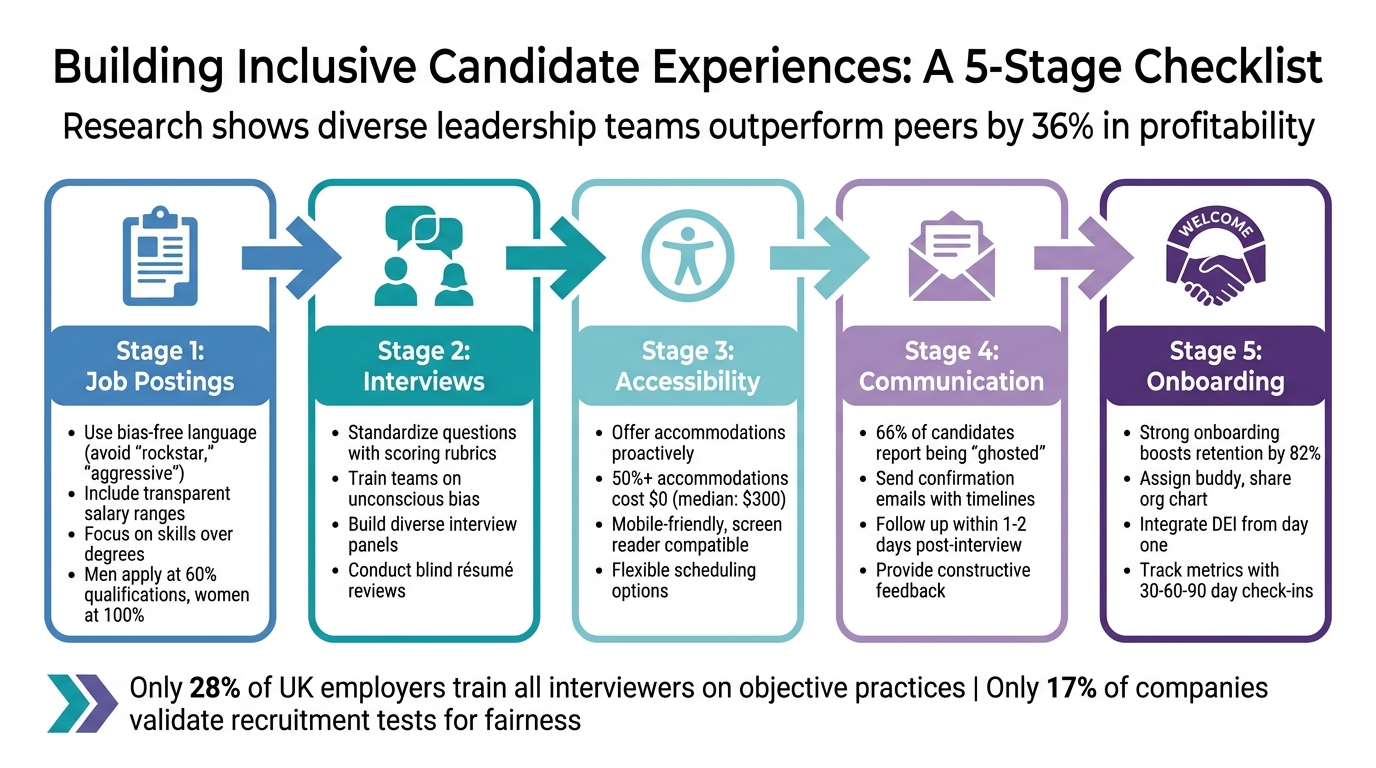
Hiring bias costs companies top talent and profitability. Research shows businesses with diverse leadership outperform peers by up to 36% in financial success. But creating a fair hiring process requires more than good intentions – it takes structured actions at every step.
Here’s how you can make it happen:
- Job postings: Use clear, bias-free language, list transparent salary ranges, and focus on skills rather than unnecessary degree requirements.
- Interviews: Standardize questions, train teams to avoid bias, and build diverse panels to ensure balanced evaluations.
- Accessibility: Ensure application platforms and processes are user-friendly for all candidates, including those with disabilities.
- Communication: Keep candidates informed with clear updates, share interview preparation resources, and provide constructive feedback.
- Onboarding: Start with a welcoming process that includes accommodations, clear expectations, and early DEI engagement.
Scaling companies often lack the time or expertise to implement these changes. That’s where Rent a Recruiter can help. Our embedded recruitment model ensures your hiring process is structured, fair, and cost-efficient – reducing hiring costs by up to 70% while saving over 80 hours per month in admin.
Ready to transform your hiring process? Start with a free Recruitment Health Check to identify gaps and get actionable next steps.
5-Stage Inclusive Hiring Process Checklist with Key Actions
How to Establish an Inclusive Recruitment Process
Job Postings and Application Process Checklist
Job postings shape a candidate’s initial impression. If the language feels exclusionary or the requirements seem overly rigid, qualified candidates may move on without applying.
Use Inclusive, Clear Language
Avoid language that unintentionally excludes candidates. For example, replace terms like "Salesman" with "Sales Agent" or swap descriptors like "aggressive" and "rockstar" for words such as "collaborative" or "expert." Phrases like "digital native" can imply age preferences and should be avoided. Instead of referencing ethnicity (e.g., "Italian"), focus on skills by saying "Italian speaking" [5][7].
Research highlights an important disparity: men tend to apply when they meet only 60% of the qualifications, while women often wait until they meet 100% [5]. By cutting unnecessary requirements, you can encourage a broader pool of applicants. This is a critical component of hiring as you scale effectively.
When it comes to neuro-inclusivity, opt for clear and specific phrasing. For instance, instead of "excellent communication skills", describe tasks like "greeting customers and explaining facility tours" [6]. Use plain English, short sentences, and aim for a reading level suitable for ages 12–14 [6][7]. For physical requirements, rephrase statements like "must be able to lift 50 lbs" to "moves equipment weighing up to 50 lbs with or without accommodations" [5].
Language that’s clear and inclusive helps set the tone for transparent expectations.
Be Transparent About Role Expectations and Salary
Transparency fosters trust. Clearly outline job responsibilities, separate "must-have" qualifications from "nice-to-have" ones, and always include salary ranges [5][2]. This is particularly important for candidates less likely to negotiate, such as women and individuals from lower socioeconomic backgrounds [6][2].
If your company offers flexible, hybrid, or part-time options, make these clear in the posting to avoid confusion [6].
A transparent and straightforward approach to job expectations pairs well with revamping your recruitment process for accessibility.
Make Application Platforms Accessible
Your application platform should be mobile-friendly, compatible with screen readers, and feature at least 12-point font with high color contrast [7]. Accessibility barriers can deter talented candidates, so removing these obstacles is essential.
Expand Your Reach with Diverse Job Boards
Relying solely on mainstream job boards limits your talent pool. To recruit a diverse workforce, consider platforms like Diversity.com, Jopwell, Techqueria (for Latinx professionals in tech), and Out in Tech (for LGBTQ+ professionals) [2]. Additionally, building partnerships with Historically Black Colleges and Universities (HBCUs) and Minority-Serving Institutions (MSIs) can help create pipelines to diverse graduate talent.
Instead of generic statements like "Equal Opportunity Employer" – which appear in 1 out of 3 job postings and often go unnoticed by candidates [6] – use specific language that demonstrates your commitment. For example, mention practices like "anonymous shortlisting" or your willingness to adjust processes for accommodations.
"Candidates from minority groups aren’t looking for a disclaimer. They’re looking for evidence." – Adrian McDonagh, Co-founder, hireful [6]
Interview and Selection Process Checklist
The interview and selection stage is where decisions truly take shape, but it’s also where bias can creep in. Subjective judgments, inconsistent practices, or inaccessible processes can derail even the best hiring intentions. A structured, thoughtful approach can help ensure fairness and inclusivity at every step.
Standardize Interview Processes
Consistency matters. Use standardized questions and evaluate answers with a pre-defined scoring system [4][2]. This approach removes guesswork and ensures all candidates are judged by the same criteria. Train interviewers on unconscious bias, disability etiquette, and the legal boundaries of questions under the ADA [4][8]. To further eliminate inconsistencies, hold calibration meetings where hiring decisions are reviewed collectively [4]. These steps ensure fairness while creating a smoother process for everyone involved. For more tools to support your hiring strategy, explore our recruitment resources.
"Inclusive hiring isn’t just about diversifying a team – it’s about ensuring equal opportunities for everyone to thrive." – Aaron Carpenter, Qualtrics [4]
Offer Accommodations and Flexible Scheduling
Be proactive. Ask candidates upfront if they need accommodations [3][8]. This might include options like sign language interpreters, extended time for assessments, virtual interviews, or accessible venues [3]. Interestingly, more than half of workplace accommodations come at no cost, and when there is a cost, the median is just $300 [8]. Offering interview questions or an outline of the process beforehand can also ease anxiety and help candidates perform at their best [8].
"Design your process proactively to be as accessible as possible… rather than simply reacting to requests for accommodation." – Glenda Sims, Chief Information Accessibility Officer, Deque [8]
Build Diverse Interview Panels
One person’s bias can influence a decision, but a diverse panel brings balance. Panels that include individuals from different backgrounds and departments not only provide varied perspectives but also create a more welcoming environment for candidates from underrepresented groups [3][2]. Ensure all panel members are trained in objective evaluation methods [4]. Research shows that when shortlists include only one woman or ethnic minority candidate, their chances of being hired are slim. However, adding more than one significantly improves the likelihood of a diverse hire [1].
"A diverse interview panel doesn’t necessarily equal an inclusive interview." – Qualtrics [4]
Conduct Blind Résumé Reviews
Start with fairness from the very beginning. Remove names, photos, addresses, and other personal identifiers from résumés to focus solely on qualifications [4][2]. If you’re using AI-driven screening tools, audit them regularly to ensure they aren’t perpetuating biases [8][2]. Blind reviews are a simple yet powerful way to reduce unconscious bias early in the hiring process, aligning perfectly with broader inclusive recruitment goals.
Communication and Feedback Checklist
Strong communication shapes candidate trust. Alarmingly, two-thirds of job seekers say they’ve been "ghosted" by employers during the hiring process [9]. Regular updates build respect and confidence, while silence can harm your employer brand and deter talented candidates. Clear communication also reinforces the inclusive DEI recruitment best practices established earlier in the process.
Develop a Clear Communication Plan
Begin with an automatic confirmation email when a candidate applies. This email should outline the next steps, the number of interview rounds, and when they can expect updates [1][9]. After an interview, follow up within 1–2 days to explain the next steps. If a candidate won’t be moving forward, notify them promptly – don’t leave them waiting for weeks. Tools with automated scheduling links can help streamline this process [9]. Remember, 75% of employees say a positive candidate experience influenced their decision to accept a job offer [9].
Share Preparation Resources for Interviews
Before the interview, send candidates a brief that includes interviewer names and bios, key responsibilities of the role, the interview format, and any materials they should bring [9]. Ask in advance if candidates need accommodations, such as extra time, camera-off options, or having questions displayed on-screen. This reduces anxiety and allows candidates to perform at their best [1]. Preparing candidates with this level of detail fosters a more equitable and effective process.
Offer Constructive Post-Interview Feedback
Generic rejection emails frustrate candidates. Instead, personalize your messages and explain why they weren’t selected [10]. If they might suit other roles, invite them to join your talent pool for future opportunities [10]. In North America, candidate resentment has reached 12% in recent years [10], impacting whether they’ll reapply, refer others, or even engage with your company’s products or services. Offering constructive feedback not only softens rejection but also maintains a positive relationship for the future.
Collect Candidate Experience Feedback
Send surveys immediately after hiring decisions are communicated [9]. Ask specific questions about each stage – application, screening, and interviews – to pinpoint areas for improvement. Keep feedback from hired and non-selected candidates separate to gain more useful insights [9]. Use these responses to refine and rate your recruitment process over time. Companies with high candidate experience ratings consistently provide feedback to rejected candidates and seek input to improve their processes [9]. Transparent communication keeps candidates informed and respected, reinforcing an inclusive recruitment approach.
sbb-itb-a23bd6a
Onboarding and Continuous Improvement Checklist
Creating an inclusive workplace doesn’t stop at hiring – it’s an ongoing process that begins with thoughtful onboarding. A strong onboarding program can boost employee retention by up to 82% [11], while employees who feel supported during onboarding are 18% more likely to feel committed to their employer [11]. A well-executed onboarding process not only sets employees up for success but also reinforces inclusivity at every step.
Build a Welcoming Onboarding Process
Start onboarding as soon as the offer is accepted. Send a detailed welcome email with essential logistics, assign a buddy to help the new hire navigate the company culture, and share an organizational chart to clarify team structures. During the first week, take the time to explain any industry-specific terms or company jargon to ensure everyone feels included, regardless of their background. Balance interactive activities like team introductions with independent time for reviewing materials, catering to different learning preferences. Above all, respect the new hire’s preferred name and pronouns to create an environment of trust and respect.
Ensure Accessibility and Accommodations
Before the new hire’s first day, confirm that any necessary accommodations are in place. This could include assistive technology, ergonomic furniture, quiet spaces, or flexible hiring models. Audit your office and digital platforms to ensure they are accessible. When planning team lunches or coffee breaks, choose locations that are physically accessible and take dietary needs into account. Tailor safety protocols, such as evacuation plans, to meet individual requirements. Importantly, over half of workplace accommodations cost nothing to implement, and the median cost for those that do is just $300 [8].
Track Metrics and Continuously Improve
Regularly monitor key metrics like salaries, raises, and bonuses across demographic groups, and conduct equity audits to identify any disparities. Use 30-, 60-, and 90-day "stay interviews" to gather feedback and address any barriers that might affect retention. Collect input on the onboarding experience after the first week and at regular intervals to refine your approach. With only 17% of companies validating their recruitment tests for fairness [1], regular audits of hiring and onboarding practices, often supported by Recruitment as a Service providers, are essential to prevent bias from creeping into the process.
Integrate DEI into Company Culture
From day one, introduce new hires to your organisation’s diversity, equity, and inclusion (DEI) goals and Code of Conduct. This sets clear expectations for behavior and reinforces your commitment to DEI. Encourage participation in Employee Resource Groups or social clubs early on, giving new hires immediate opportunities for networking and advocacy. During the first year, conduct a performance review that highlights achievements and discusses future career growth and development opportunities. As Glenda Sims, Chief Information Accessibility Officer at Deque, explains:
"Equitable and inclusive hiring is not just about making more offers to people with disabilities. It’s about valuing the expertise and experience of employees with disabilities and supporting their professional growth through their entire journey" [8].
Companies that prioritise inclusivity for employees with disabilities see, on average, 28% higher annual revenue [8]. These onboarding strategies not only help retain talent but also contribute to long-term business success, creating a culture where inclusivity becomes second nature at every stage of the employee journey.
How Rent a Recruiter Supports Scalable Hiring
Rent a Recruiter provides tailored solutions that help businesses scale their hiring efforts while maintaining inclusive practices. By embedding experienced recruiters into your team, they bring structure, consistency, and cost savings of up to 70% compared to traditional commission-based models. For high-growth SMEs, this approach ensures DEI (Diversity, Equity, and Inclusion) standards are upheld, even during periods of rapid expansion.
Embedded Recruitment Expertise: A Game-Changer
When hiring managers juggle recruitment alongside their core responsibilities, it can lead to rushed decisions and inconsistencies. Embedded recruiters eliminate this risk by taking full ownership of the hiring process and implementing practices like standardized interview guides, behavioral scoring rubrics, and blind résumé reviews. These methods ensure every candidate is assessed fairly and consistently. With 48% of HR managers acknowledging that bias influences their hiring decisions [12], this level of standardization is crucial.
Embedded recruiters also shift recruitment from being reactive to proactive. By building "warm" talent pipelines before roles are even available, companies can cut time-to-fill from the usual 42–49 days to as little as 29 days [13]. This proactive approach not only accelerates hiring but also helps identify high-potential candidates from underrepresented groups, turning recruitment into a strategic advantage.
Recruitment Health Checks: A DEI Benchmarking Tool
Rent a Recruiter offers free Recruitment Health Checks to help businesses identify bias and gaps in their hiring practices. These assessments review job descriptions for exclusionary language like "rockstar" or "dominant" [2][14], evaluate whether job requirements focus on essential skills rather than unnecessary degrees, and check for transparent salary bands in compensation practices. The result is a detailed PDF report with actionable recommendations to improve your hiring process and expand your talent pool.
Since only 17% of companies validate their recruitment tests for fairness [1], regular audits are essential. These Health Checks ensure your processes align with DEI best practices, helping you avoid unintentionally excluding qualified candidates. With companies in the top quartile for ethnic diversity outperforming their peers by 36% in profitability [12][14], these adjustments don’t just enhance inclusivity – they also boost your bottom line.
Contract Staffing: Building Diverse Talent Pipelines
For businesses needing flexible access to talent, Rent a Recruiter’s contract staffing services provide a ready-made solution. They maintain vetted pipelines of professionals from diverse and non-traditional backgrounds, making it easier to fill critical roles quickly. Given that 73% of candidates are passive [13], this proactive approach significantly expands your reach.
Contract staffing also allows companies to evaluate candidates for cultural fit and long-term potential before making permanent hiring decisions. As organizational psychologist Adam Grant puts it:
"The starting point is to look at your culture and ask, ‘What’s missing?’ Then hire, promote, and reward people who can improve and evolve that culture" [14].
This approach ensures you’re bringing in individuals who genuinely enhance your workplace culture while avoiding rushed, permanent commitments.
Strengthen Employer Branding to Attract Talent
Employer branding and talent mapping are powerful tools for reaching underrepresented groups and improving candidate perceptions. With 80% of workers considering inclusion efforts when choosing an employer [12][14], showcasing real employee stories and transparent salary details on your careers page can make a significant difference in who applies.
Conclusion and Next Steps
Creating a more inclusive candidate experience is a journey, not a one-time task. This checklist serves as your guide to weaving inclusivity into every stage of your hiring process. It’s designed to help HR teams identify and address areas where bias may exist.
Start by reviewing your job descriptions. Strip out gendered language and unnecessary degree requirements that could deter qualified candidates. Then, bring consistency to your interviews with structured questions and clear evaluation criteria. It’s worth noting that only 28% of UK employers train all interviewers on legal obligations and objective practices [1]. Offering this training can set your company apart. Use feedback from candidates and track diversity metrics to drive continuous improvements.
Keep a close eye on your progress by analysing candidate feedback and tracking diversity data throughout your hiring funnel. If you notice gaps – be it in sourcing channels, the diversity of your interview panels, or the accommodations you offer – address them with a clear, step-by-step approach.
For teams lacking the time or expertise to tackle these changes, Rent a Recruiter can help. Our embedded recruitment solutions place experienced recruiters directly within your team. This means you’ll benefit from structured hiring processes, tools to reduce bias (like blind résumé reviews), and proactive talent pipeline strategies. Plus, you can cut hiring costs by up to 70% and save over 80 hours a month on internal admin. Start with a free Recruitment Health Check to evaluate your current practices and get actionable next steps.
FAQs
What are the quickest changes I can make to reduce hiring bias?
Structured interviews with consistent scoring rubrics are a practical way to reduce hiring bias. By standardizing questions and evaluation methods, you ensure every candidate is assessed on the same criteria. Pair this with blind screening, where identifying details like names and demographics are hidden, to further minimize unconscious bias in early stages.
Another key step is revising job descriptions. Removing biased language and ensuring the wording is inclusive can make a big difference in attracting a broader and more diverse range of candidates. These straightforward adjustments can help create a hiring process that’s both fair and effective.
How do I standardize interviews without making them feel scripted?
To keep interviews consistent yet conversational, adopt structured interview techniques with a clear set of job-specific questions. This approach ensures consistency and fairness while avoiding a mechanical tone.
Use rubrics or checklists to evaluate essential skills and competencies, and provide interviewer training on unconscious bias and inclusive communication. These measures create an environment where candidates feel respected and at ease, blending structure with authentic dialogue.
How can I measure whether our candidate experience is truly inclusive?
To understand how inclusive your hiring process is, start by collecting feedback from candidates about their experience. Did they feel the process was fair? Were their unique needs considered? Evaluate whether your application materials and interview environments are accessible to individuals with varying abilities and backgrounds. Tools like post-interview surveys or feedback forms can help pinpoint areas that need attention. Regularly reviewing this data ensures your hiring process stays fair and accessible to everyone.