
Free hiring tools can cut software spend to $0 in key parts of your process, but they only work if they remove admin, save time, and keep hiring moving.
If you are hiring across SaaS, Technology, IT, Fintech, Engineering, Security, Insurance, or Professional Services, the best free stack in 2026 is usually simple: one ATS, one sourcing tool, one scheduling tool, one screening tool, and one tool for interview admin. That setup can help you protect budget, cut back-and-forth, and give your team more control without adding more headcount.
Here’s the short version:
- Use free ATS tools for low-volume hiring and single-role pipelines
- Use free sourcing tools when you need outbound search without extra licence costs
- Use free scheduling tools to cut interview admin
- Use free screening tools to reduce interview load
- Use AI and interview note tools to save recruiter and hiring manager time
- Move on from free tools when admin time, slow feedback, and split workflows start costing more than software
A lean stack can work well at the start. But once hiring volume climbs, the hidden cost shows up fast. If your team is losing 80+ hours per month to hiring admin, or paying high agency fees role by role, the problem is no longer tooling alone. That is often the point where embedded recruitment starts to make more financial sense than patching gaps with more software (you can calculate your potential savings here) or relying on traditional recruitment agencies.
18 free recruiting tools no one told you about (Until now!) 🤫
sbb-itb-a23bd6a
Quick Comparison
| Tool type | Best use | Main free-plan limit | Business impact |
|---|---|---|---|
| Free ATS | Single active role hiring | Tight seat, role, or reporting limits | Lower software spend for early hiring |
| Free sourcing tool | Targeted outbound search | Search volume and platform limits | More pipeline without licence cost |
| Free scheduling tool | Screening and first-round calls | Limited meeting types | Less time lost to coordination |
| Free screening tool | Early filter before interviews | Test caps and paid customisation | Fewer low-fit interviews |
| Free interview admin tool | Notes, summaries, and write-ups | Monthly caps or model limits | Lower admin load for recruiters and managers |
The point is simple: pick tools that save time, not just tools that say "free". Below, I break down where free tools help, where they fall short, and how to rate your recruitment process to tell when your team needs more support.
Quick Comparison: Free Hiring Tools for Tech Teams
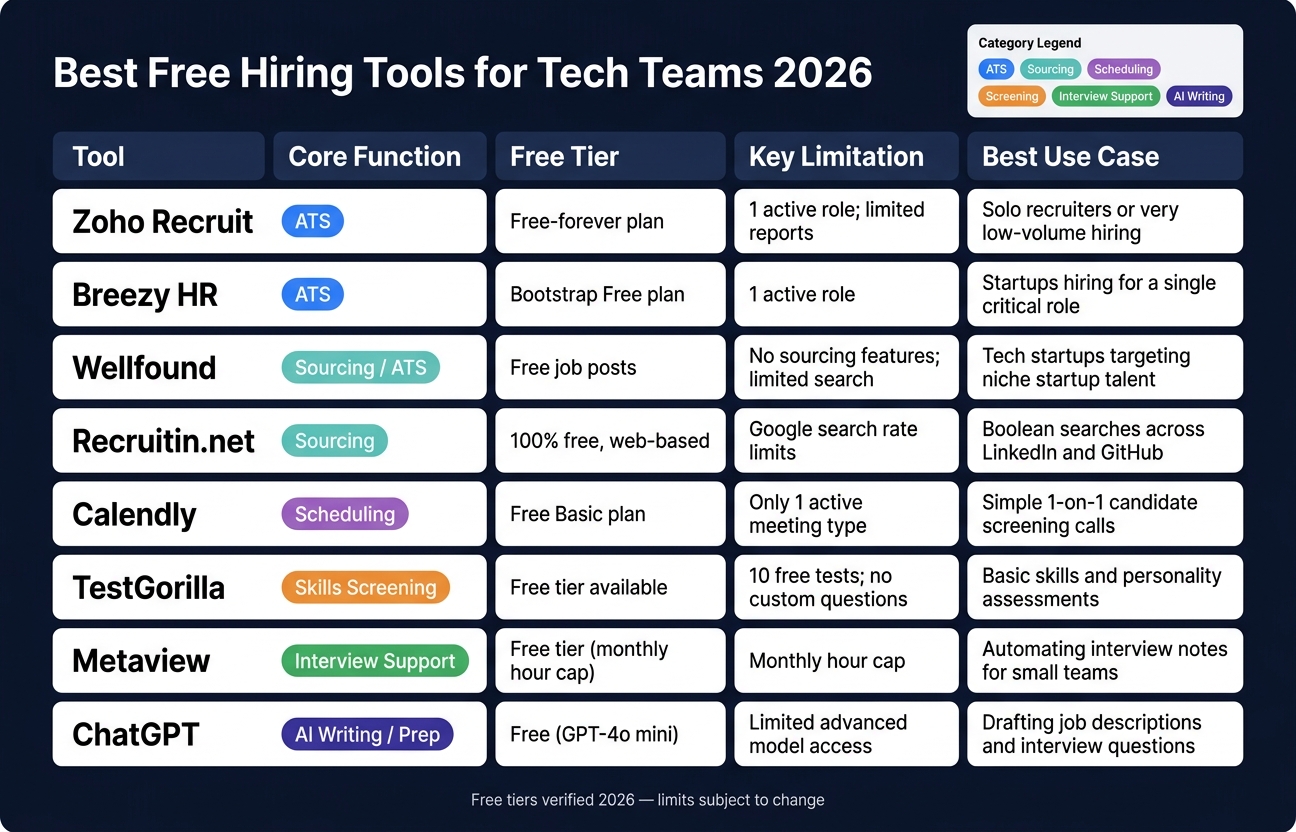
Best Free Hiring Tools for Tech Teams 2026
Use this table to match each tool to the hiring bottleneck it solves fastest, across sourcing, scheduling, screening, and interview support. It gives you a quick way to choose one tool for each hiring gap before you get into the detailed breakdown below.
Comparison Table: Tool, Function, Free Tier, Limitation, Best Use Case
| Tool | Core Function | Free Tier | Key Limitation | Best Use Case |
|---|---|---|---|---|
| Zoho Recruit | ATS | Free-forever plan | 1 active role; limited reports | Solo recruiters or very low-volume hiring |
| Breezy HR | ATS | "Bootstrap" Free plan | 1 active role | Startups hiring for a single critical role |
| Wellfound | Sourcing / ATS | Free job posts | No access to "Source" features; limited search | Tech startups targeting niche startup talent |
| Recruitin.net | Sourcing | 100% free, web-based | Limited by Google search rate limits | Searches across LinkedIn and GitHub |
| Calendly | Scheduling | Free Basic plan | Only 1 active meeting type or link | Simple 1-on-1 candidate screening calls |
| TestGorilla | Skills Screening | Free tier available | Limited to 10 free tests; no custom questions | Basic skills and personality assessments |
| Metaview | Interview Support | Free tier (monthly hour cap) | Monthly hour cap | Automating interview notes for small teams |
| ChatGPT | AI Writing / Prep | Free (GPT-4o mini) | Limited access to advanced models | Drafting job descriptions and interview questions |
Single-purpose tools usually give you the most from a free plan. If you’re hiring with a lean team, that matters. You can fix one bottleneck at a time without adding extra cost or dragging your team into a bloated system.
Next, each category breaks down the free tools that fit startup hiring best.
The Most Useful Free Hiring Tools in 2026
These free tools matter most when your startup needs to hire faster without adding headcount or software spend. The key is simple: match the tool to the hiring bottleneck it solves.
ATS and Startup Recruiting: Zoho Recruit, Breezy HR, and Wellfound
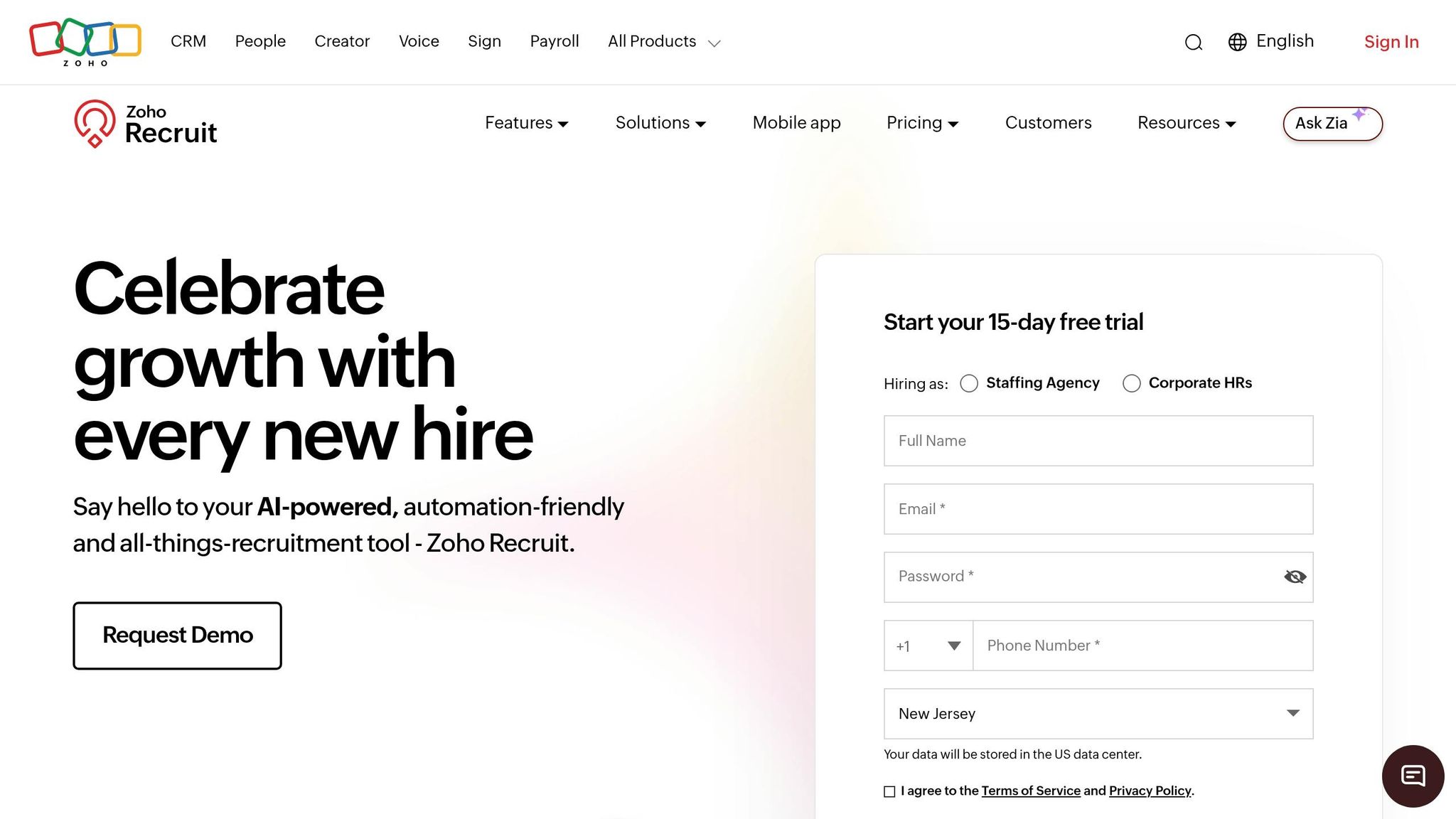
For early-stage teams, the right ATS keeps hiring organised without needing a dedicated ops person to manage it.
Zoho Recruit has a free-forever plan built for solo recruiters or very low-volume hiring. The main limit is one active role at a time, plus restricted reporting. It works best when you need basic pipeline tracking and don’t want to move to a paid plan yet.
Breezy HR follows a similar model with its Bootstrap free plan. Like Zoho Recruit, it limits you to one active role. It’s a good fit if you’re hiring for one business-critical role and need a structured pipeline without the weight of a full ATS.
Wellfound works a bit differently. Free job posts give you direct access to startup-focused talent, including engineers and product candidates already looking at early-stage roles. The trade-off is limited search functionality and no sourcing features on the free tier. It works best when the people you want are already active on the platform.
Once sourcing is in place, screening usually becomes the next pinch point.
Sourcing, Scheduling, and Screening: Recruitin.net, Calendly, and TestGorilla
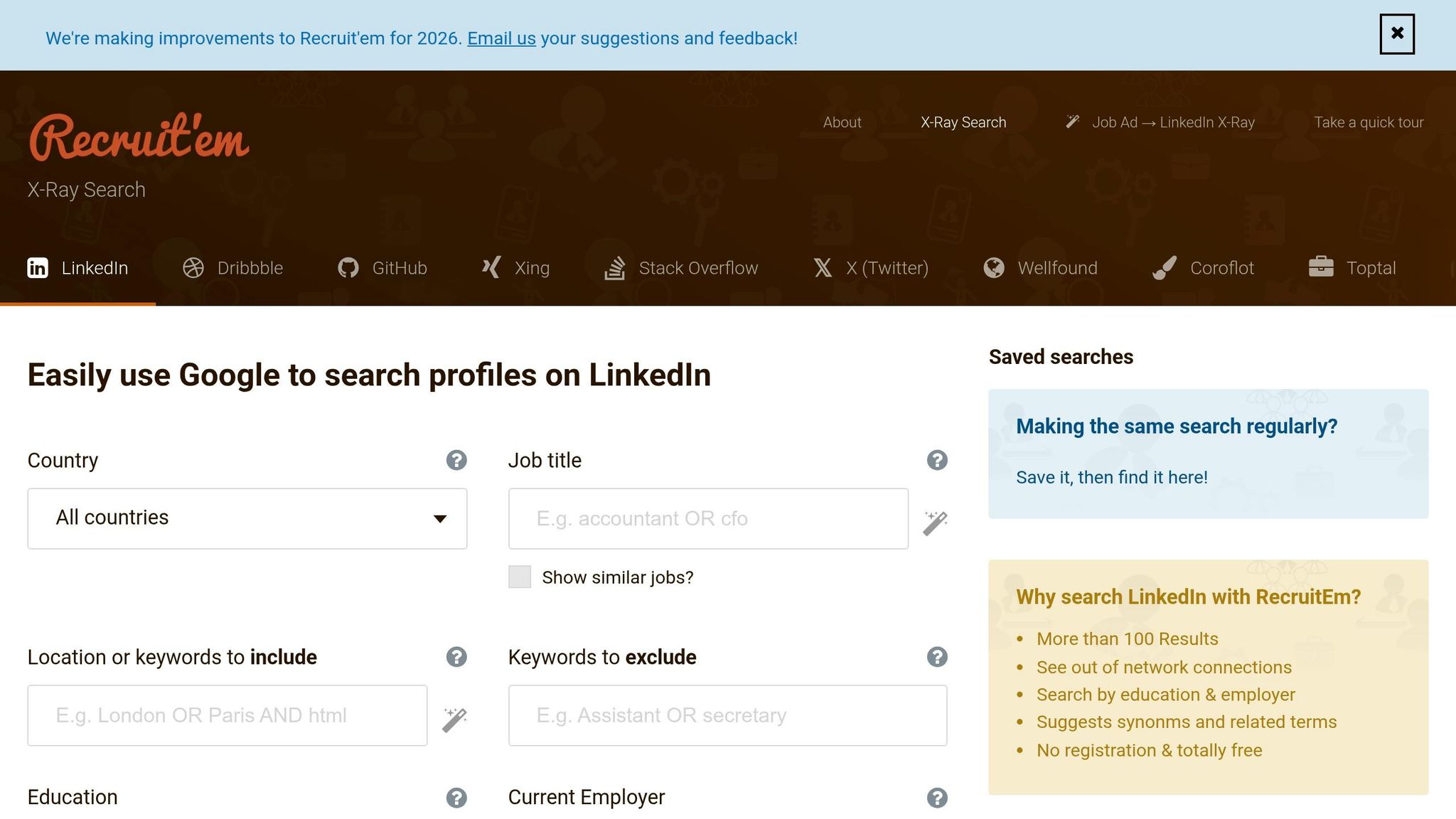
Recruitin.net is fully free and browser-based. It runs Boolean searches across LinkedIn and GitHub without the need for a paid sourcing licence. The main limit is Google search rate throttling, which can slow down high-volume searches. It fits teams that need targeted sourcing without buying a separate sourcing tool.
Calendly covers scheduling on its free Basic plan. It supports one active meeting type, which is enough for simple one-to-one screening calls. For most early-stage hiring workflows, that removes the usual back-and-forth from interview coordination and saves your team time.
TestGorilla has a free tier with up to 10 tests across skills and personality. Custom questions sit behind paid plans. It fits teams that want a fast, standardised way to screen candidates before interviews, especially when internal interview time is limited.
AI Writing and Interview Support: ChatGPT and Metaview
ChatGPT on the free tier, GPT-4o mini, can handle job description drafts, interview question sets, and outreach copy. Access to advanced models is limited on the free plan, but for structured writing tasks, the free version covers most early-stage hiring needs.
Metaview automates interview notes within a monthly hour cap on its free tier. That cuts down the time spent on manual note-taking after interviews and helps keep candidate evaluations more consistent across a small hiring team. Because of the cap, it works best for low-to-moderate interview volume.
The next step is pairing these tools into a simple workflow.
How to Build a Lean Free Hiring Stack
Match Tools to Your Hiring Stage and Team Size
Start with the tool that clears your biggest hiring bottleneck.
That sounds obvious, but teams often do the opposite. They add software too early, stack up free tools, and end up with more tabs, more admin, and no real gain in hiring speed.
A better way is simpler. Use the comparison table to match each bottleneck to one tool.
Start with the step that slows hiring most. Add automation only when one step becomes the constraint. The goal is to solve friction as it shows up, not before it exists.
For scaling teams, that matters. Every extra tool brings setup time, handoffs, and process drag. If you’re hiring at low volume, a lean stack can save money and still get the job done. If you’re hiring across SaaS, Technology, IT, Fintech, Engineering, Security, Insurance, or Professional Services, the same rule applies: fix the choke point first, then decide if another tool is worth the time.
Signs That Free Tools Are No Longer Enough
When the free stack starts to crack, you usually feel it fast.
Screening overload is the clearest sign. Once resume volume goes past what your team can review, rigid filters start to replace human judgment. That creates risk. You can miss strong candidates simply because the process can’t keep up.
Scheduling strain tends to come next, especially in roles where early communication shapes conversion. Delays at this stage don’t just slow hiring. They can hurt response rates and reduce interview attendance.
Other signs are less dramatic, but just as costly:
- Workflow gets split across too many tabs
- Candidate evaluations become inconsistent
- Interview feedback loops drag out
- Hiring managers lose visibility into progress
Outreach quality is another marker. Generic outreach gets weak replies. Personalised outreach performs far better. If reply rates stay flat while volume climbs, that’s usually not a people problem. It’s a process problem, and a free tool on its own may not solve it.
For CEOs, CFOs, HR leaders, and Talent Leaders, this is where the cost picture shifts. The tool may still be free, but the time cost is not. If your team is spending hours patching gaps between systems, you’re already paying for the stack, just not on an invoice.
Pros and Cons of a Free-First Hiring Stack
A free-first stack is a smart place to start.
It keeps spend low, forces prioritisation, and can work well for low-volume hiring. For early-stage teams or companies hiring in short bursts, that’s often enough.
The trade-off is time. Someone on your team is always filling the gaps between tools. That might be fine when hiring demand is light. It becomes expensive when your team starts spending more time managing the process than moving candidates through it.
When free tiers begin to cap volume, usage-based pricing can be a sensible next step. Models like $0.10 per application or $1.00 per screening keep costs tied to actual hiring demand [1][2].
That gives you a cleaner way to scale without jumping straight into a bigger software commitment. It also makes hiring costs easier to track, which matters when you’re under pressure to cut admin time, protect team capacity, and improve hiring output at the same time.
Conclusion: Pick Free Tools That Save Time and Support Hiring at Scale
The best free hiring tools in 2026 cut friction without making your process harder to run.
Keep your stack lean. Add a new tool only when a new bottleneck shows up.
Start with the part of hiring that slows you down most, whether that’s sourcing, scheduling, screening, or tech recruitment solutions for interview admin. The goal isn’t more software. It’s less wasted time, lower admin load, and better hiring flow.
At a certain point, free tools stop fixing the problem. When that happens, the issue is usually capacity, not software. If your team is still buried in admin, it’s time to shift from adding tools to adding support.
When hiring demand outgrows a free stack, moving to embedded recruitment can give you more control and more output without building a full internal team too soon. Rent a Recruiter places experienced recruiters into your team within days, running hiring end-to-end while adding structure, visibility, and consistency. For high-growth teams, that means less internal hiring admin, faster execution, and a clearer path to scale.
FAQs
How do I choose the right free hiring stack for my team?
Start with your bottleneck: sourcing, screening, skills matching, niche search, or behaviour validation. Don’t add tools before you know which step is slowing hiring down.
That sounds simple, but it saves time and money. If your issue is top-of-funnel volume, you need help with sourcing. If the problem is interview quality or poor shortlists, adding more sourcing tools will just pile up noise. Fix the slow step first.
For occasional hiring, fewer than 2 to 3 hires per quarter, a disciplined free ATS tier plus light sourcing can do the job. It keeps spend low and gives you enough structure to manage hiring without building a heavy stack.
Once hiring becomes repeatable across teams, patchwork free tools often start costing you more than they save. Recruiters lose time switching between systems, reporting gets messy, and the hidden cost shows up in slower hiring and less visibility for leadership. What looks cheap on paper can get expensive in recruiter hours.
Use AI to filter for must-haves, but keep final decisions with human review and structured scorecards. That gives you a cleaner shortlist without handing over judgement. In practice, AI should support recruiter capacity, not replace hiring discipline.
When should I stop relying on free hiring tools?
Stop leaning on free hiring tools once hiring turns into a repeatable part of the business and stretches across more than one role. They’re fine for the odd hire. They start to cost you when volume picks up.
That cost usually doesn’t show up as software spend. It shows up in recruiter or HR time, slower shortlists, and missed hiring targets.
In practice, Rent a Recruiter says free tools tend to work best for low-volume hiring:
- Fewer than 2 to 3 hires per quarter
- Under 10 hires per year
Once manual tracking and admin start slowing the team down, it’s time to move to an ATS or a hiring process that can scale with you.
Which free tool should I add first?
Start with a free ATS tier so you can keep your candidate pipeline in one place and move away from manual spreadsheets.
Once you’re ready to add automation, focus first on candidate sourcing and resume screening tools. These can cut manual admin work by 60% to 70%, which means less time lost on repetitive tasks and more time spent moving roles forward.
If hiring demand picks up fast, Rent a Recruiter can place experienced recruiters inside your team to run these systems and build a structured recruitment function from day one. That gives you better process control, time saved, and a setup that can handle growth without the usual hiring chaos.